


Table of Contents
- Why Coaches Publish: The Business Case Beyond Book Sales
- How to Use a Book to Get Coaching Clients
- How to Structure a Non Fiction Book Outline That Sells Your Method
- Authority, Speaking Engagements, and Media Visibility
- The ROI of Publishing: Time, Money, and Lead Value
- Self-Publishing vs Traditional Publishing for Coaches
- Post-Publication Marketing: Book Launch Strategy and Content Repurposing
- Conclusion: Turning Your Book Into a Business Asset
- Frequently Asked Questions
Last Updated: October 3, 2026
Why Coaches Publish: The Business Case Beyond Book Sales
According to Gitnux Book Publishing Statistics, over 90% of self-published titles sell fewer than 100 copies. That number sounds like a warning. For coaches, it’s actually the whole point. The benefits of publishing a book for coaches rarely show up in royalty statements, they show up in discovery calls, speaking invitations, and clients who arrive already convinced. At Best Seller Publishing, we’ve watched this play out across more than 1,000 authors.
The mistake most first-time authors make is treating the book as the product. It isn’t. The book is the lead magnet, the business card, and the proof of expertise rolled into one. Consulting Success documented a consultant whose book became a ticket to a full client roster, plus media attention and new collaboration offers. None of that came from book sales. It came from what the book made possible.
Below, we break down exactly how that works, from client acquisition to launch strategy, so you can decide whether publishing fits your coaching business.
How to Use a Book to Get Coaching Clients
A book gets you coaching clients by shortening the trust gap. Prospects who’ve read your book arrive at a sales conversation already sold on your thinking.
But “write a book and clients will come” is not a system. What most coaches miss is the funnel architecture that turns a reader into a booked call.
Stage 1: Attract, the free chapter as top-of-funnel.
Offer chapter one as a downloadable lead magnet in exchange for an email address.
Stage 2: Nurture, the reader-to-client email sequence.
This is the step almost every competitor skips. A downloaded chapter is not a client.
Stage 3: Convert, the book as a sales-call asset.
Reference your framework by name during the call. Arriving with a published book changes the tone of that conversation before you say a word.
Stage 4: Expand, the book as a referral engine.
Send copies to referral partners, event organizers, and past clients who can introduce you.
Here’s how to structure that into a working client acquisition system:
- Put the book in the funnel. Offer a free chapter as the entry point, then follow up with a call invitation.
- Use it as a lead magnet on your site. Replace the generic “download our guide” offer with your actual book.
- Hand it out strategically. Send copies to referral partners, event organizers, and past clients who can introduce you.
- Reference your framework in sales calls. The book becomes your shared vocabulary with the prospect.
- Bundle it with high-ticket coaching. A signed copy plus a discovery session converts better than either alone.
The coaches who get the most from their book don’t wait for readers to find it. They ship a copy to every qualified prospect before the first call, and they run the free-chapter funnel on autopilot so new readers enter the sequence every week without manual effort.
The unique angle here is integration, not inspiration. A book that sits on a shelf is a credential. A book wired into an automated email sequence and a discovery-call workflow is a client acquisition machine that runs while you’re in session with someone else.
How to Structure a Non Fiction Book Outline That Sells Your Method
Learning how to structure a non fiction book outline starts with one decision: is this book a memoir or a method? For coaches, it must be a method. A method book teaches your signature framework in a sequence that mirrors how you actually work with clients.
Build the outline in four passes:
- Pass 1: Define the transformation. Write one sentence describing who the reader is before the book and who they are after.
- Pass 2: Name your framework. Give your process a name and break it into three to five stages. This becomes your table of contents.
- Pass 3: Assign one chapter per stage. Each chapter solves one problem and ends with a small action the reader can take.
- Pass 4: Add proof. Case examples, client stories, and data go inside chapters, not in a separate section nobody reads.
That structure does double duty. It organizes the manuscript, and it becomes the same framework you sell in high-ticket coaching. Stacy Ennis notes that coaches increasingly use books to develop clarity, define frameworks, and carve out niche positioning in crowded markets.
Authority, Speaking Engagements, and Media Visibility
Publishing a book is the fastest route to being treated as an industry expert. Event organizers, podcast hosts, and journalists all need credentialed guests, and “author” is the credential they screen for first. Coaches who publish consistently report more inbound speaking invitations than non-author coaches with similar experience, according to Coachilly’s guide to bestselling books for coaches.
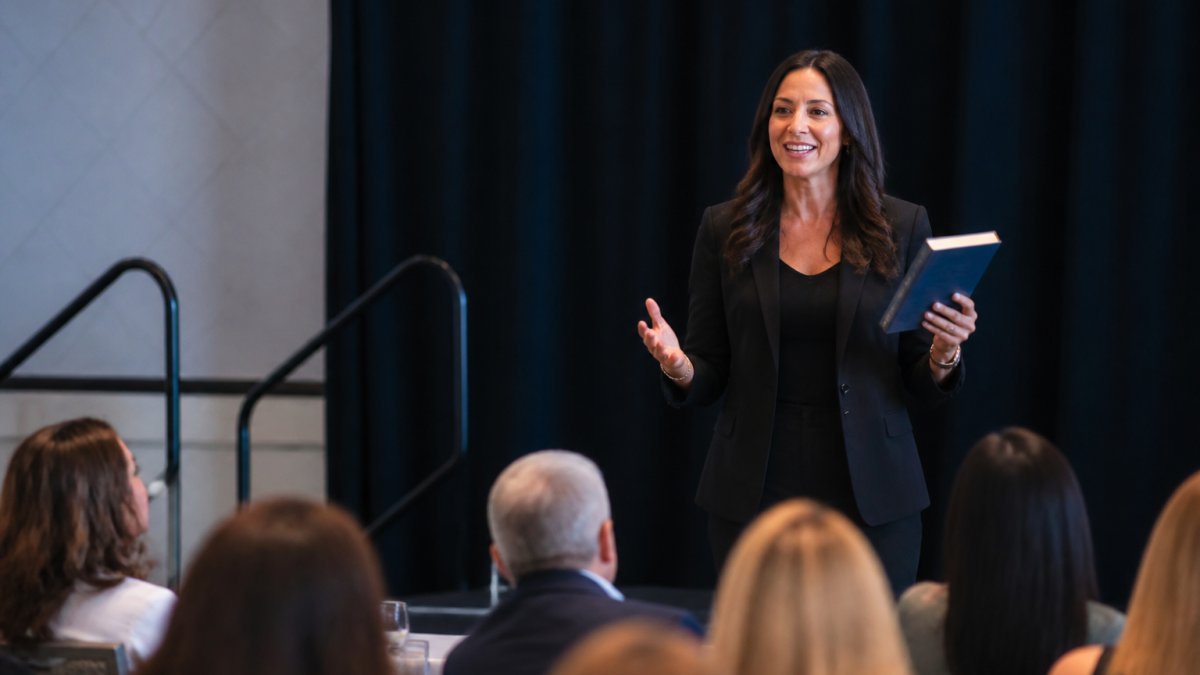
Media visibility compounds the same way. A book gives a producer something concrete to book you around, and it gives you a topic to talk about that isn’t a sales pitch. This is where thought leadership stops being a buzzword and starts being a calendar full of invitations.
Authority isn’t claimed, it’s conferred. A published book is the artifact other people point to when they introduce you, which is why it outperforms a website, a podcast, or a LinkedIn following as a credibility signal.
The ROI of Publishing: Time, Money, and Lead Value
The ROI of publishing a book for coaches should be measured in client value, not copies sold. A single high-ticket coaching client can justify the entire project. Ten copies sold to the right prospects beats a thousand sold to strangers.
Most articles stop at that sentence and call it ROI. That’s not ROI, that’s a slogan. Here’s the actual math, and the framework to run it on your own numbers.
The conversion equation.
Think of your book as a top-of-funnel asset with three conversion points:
- Reader to lead: The percentage of people who encounter your book (free chapter, gifted copy, event handout) and join your email list.
- Lead to call: The percentage of email subscribers who book a discovery call after your nurture sequence.
- Call to client: Your existing close rate on discovery calls.
Multiply those three rates against the number of people who encounter the book, and you get your projected client count.
The lifetime-value comparison.
The honest framing is this: compare the total investment against the lifetime value of one or two coaching clients. If your average engagement is worth several thousand dollars, the book pays for itself with a handful of conversions.
Run the math on your own numbers:
| Cost Category | What You’re Actually Buying | Typical Timeframe |
|---|---|---|
| Writing and editorial | A manuscript that reflects your method | 3-6 months |
| Publishing and design | Professional credibility, retail distribution | 1-2 months |
| Launch and marketing | Visibility, speaking invitations, media | 1-3 months |
| Ongoing promotion | Lead flow, client acquisition | Continuous |
Pricing for done-for-you publishing depends on scope, so we won’t quote a number here.
The hidden ROI line items.
Book sales are the smallest line on the return side. The larger returns show up as:
- Speaking fees and invitations that arrive because an organizer needed a credentialed guest.
- Higher close rates on discovery calls when the prospect has already read your framework.
- Referral velocity from partners who hand your book to their network on your behalf.
- Premium pricing power when your market treats you as the author of the definitive book on your topic.
Don’t judge the book by its first 90 days of sales. Authors who quit promoting after launch week miss the compounding effect, where speaking invitations and referrals arrive months later from readers who finally got around to the book. The ROI curve on a book is back-loaded, not front-loaded.
The unique angle most competitors miss: ROI isn’t a single number, it’s a system. Build the funnel, measure the three conversion rates, and the book stops being a cost center and becomes the highest-leverage asset in your coaching business.
Self-Publishing vs Traditional Publishing for Coaches
Self-publishing wins for most coaches, because speed and control matter more than gatekeepers. Traditional publishing offers editorial vetting and bookstore placement, but it takes years and hands over your timeline. For a coach who needs a business asset this year, that trade rarely makes sense.
| Factor | Self-Publishing | Traditional Publishing |
|---|---|---|
| Timeline | Months | 1-3 years |
| Control over content | Full | Publisher-led |
| Royalty per copy | Higher | Lower |
| Advance payment | None | Possible |
| Best for | Business asset, fast launch | Legacy, bookstore reach |
| Editorial vetting | You hire it | Built in |
Traditional publishing does carry a perception advantage, since the manuscript passes review by industry professionals. The Fully Booked Coach points out that this vetting process is part of why traditional authorship reads as a credibility signal. If that signal matters more to your market than speed, it’s worth the wait. For most coaches building a lead generation engine, it isn’t.
Post-Publication Marketing: Book Launch Strategy and Content Repurposing
A book launch strategy is only the first 30 days of a much longer campaign. The work that actually generates clients happens after launch, when you repurpose the manuscript into content that keeps finding new readers.
Five moves that keep a book working for years:
- Mine the book for content. Every chapter contains five to ten posts, emails, or short videos.
- Pitch yourself as a guest. Use the book as your hook for podcasts, summits, and local media.
- Build a speaking one-sheet. Position yourself around the book’s framework, not your job title.
- Run a reader-to-client sequence. Emails that deliver value from the book, then invite a conversation.
- Refresh the launch annually. New editions, updated data, and a second push to a fresh audience.
Content repurposing is where the economics improve. One manuscript can feed a year of marketing, which is why the book’s real return shows up in your funnel, not your royalty dashboard.
Conclusion: Turning Your Book Into a Business Asset
The challenge most coaches face isn’t writing ability, it’s treating the book like a project instead of an asset. Finished and shelved, it does nothing. Wired into your sales funnel, it attracts clients, books you on stages, and builds the personal brand that makes high-ticket coaching easier to sell.
That’s the work we do at Best Seller Publishing. Our done-for-you packages cover ghostwriting, book coaching, publishing, launch, and media placement, with a track record of more than 1,000 best-selling authors. If you want to establish authority in your field, attract new clients, and achieve bestseller status on major platforms, we handle the process from manuscript to media appearances.
Get started with Best Seller Publishing and turn your expertise into a book that grows your business.
Frequently Asked Questions
How does a book help a coach attract high-ticket clients?
A book positions you as an industry expert, making it easier to attract high-ticket coaching clients. It acts as a lead magnet and sales funnel entry point: potential clients read your book, see your methodology, and reach out. Coaches who publish often report more inbound speaking engagements and inbound leads. The book itself doesn’t need to sell thousands of copies; its value is in opening doors to premium clients.
How long does it take for a coach to write and publish a book?
Timelines vary based on your writing process and publishing path. Self-publishing can take 6-12 months if you write part-time, while a done-for-you service can compress that to 3-6 months. Traditional publishing often takes 1-2 years. For busy coaches, using a book coach or ghostwriter can cut months off the process while maintaining editorial standards. The key is to set a realistic schedule that fits your practice.
What is the difference between a lead magnet and a published book for coaches?
A lead magnet is typically a short PDF or checklist that captures email addresses. A published book is a more substantial authority asset that can be sold or given away, but it also serves as a lead magnet on a larger scale. Books carry professional credibility and can be used for speaking engagements, media appearances, and high-ticket client acquisition. They work together: your book can include a call-to-action that drives readers to your lead magnet or discovery call.
Do coaches need a bestseller to see business growth?
No, bestseller status is not required for business growth. Over 90% of self-published titles sell fewer than 100 copies, yet many coaches still benefit from publishing because the book establishes authority and generates leads. The real ROI comes from how you use the book: as a business card, a client acquisition tool, and a platform for speaking and media. Focusing on strategic positioning and marketing will yield more results than chasing a bestseller label alone.