

Table of Contents
- Understand the Difference: Author on TV vs. TV Writer
- How to Pitch a Book to Media Outlets and Producers
- Build Your Author Media Kit Template
- How to Prepare for a TV Interview: Essential Steps
- Local vs. National TV: Where to Start Your Campaign
- Build Your Industry Networking and Connections
- Frequently Asked Questions
Last Updated: September 18, 2026
Understand the Difference: Author on TV vs. TV Writer
To get on TV as an author is fundamentally different from becoming a professional TV writer. A TV writer creates scripts and works in a writers’ room, a career requiring years of spec writing and industry networking. An author on TV appears as a guest to discuss their book or expertise, a media appearance strategy. As an author seeking TV appearances, you pitch yourself and your book as valuable content to producers, not scripts to network executives. At Best Seller Publishing, we’ve helped over 1,000 authors achieve bestseller status, turning unique expertise into impactful, income-generating books. We guide you through every step of the process, from writing and publishing to marketing your book and securing media appearances.
The fastest path to TV appearances isn’t through the entertainment industry, it’s through media relations. Producers book guests based on relevance to current events and audience value, not screenwriting credentials.
How to Pitch a Book to Media Outlets and Producers
Your pitch is everything. Producers receive hundreds of pitches weekly and delete most in seconds. The fundamental mistake: leading with your book. Producers care about their audience and filling airtime, not your book. Pitch a story or expertise angle that solves a problem for viewers, not a product to sell.
Here’s the structure that works:
Start with a hook tied to current events or trending topics. Goody Business Book Awards found that authors finding success with media pitching are aligning book topics with timely hooks rather than just pitching the book itself.
Pitch platforms that work:
- Local TV stations (easier to book than national)
- Podcast networks aligned with your topic
- News segments covering your industry
- Talk shows with rotating guest segments
- Radio shows with interview formats
Lead with audience value, not your book. Producers book guests who solve problems for viewers, not authors who want to sell books.
Build Your Author Media Kit Template
Your headshot: Professional, high-resolution, recent photo. Your bio: 2-3 sentences leading with credentials. “Jane Smith helped 500+ clients build retirement plans worth $50M+” beats generic statements. Your book cover and description: 2-3 sentences focused on reader benefit. Your talking points: 3-5 actionable, specific messages tied to current events. Your social media and website: Make it easy to verify credibility. Your availability: Be specific about when you can appear. Media appearances: List TV, radio, or podcast credits if you have them.
Here’s a template you can adapt:
[YOUR NAME]
[Your Professional Headline]
BIO:
[2-3 sentences about your credentials and accomplishments]
BOOK:
[Book Title], [2-3 sentence description of reader benefit]
KEY TALKING POINTS:
- [Specific, actionable insight #1]
- [Specific, actionable insight #2]
- [Specific, actionable insight #3]
MEDIA AVAILABILITY:
[Days/times you can appear]
CONTACT:
[Email] | [Phone] | [Website] | [LinkedIn]
How to Prepare for a TV Interview: Essential Steps
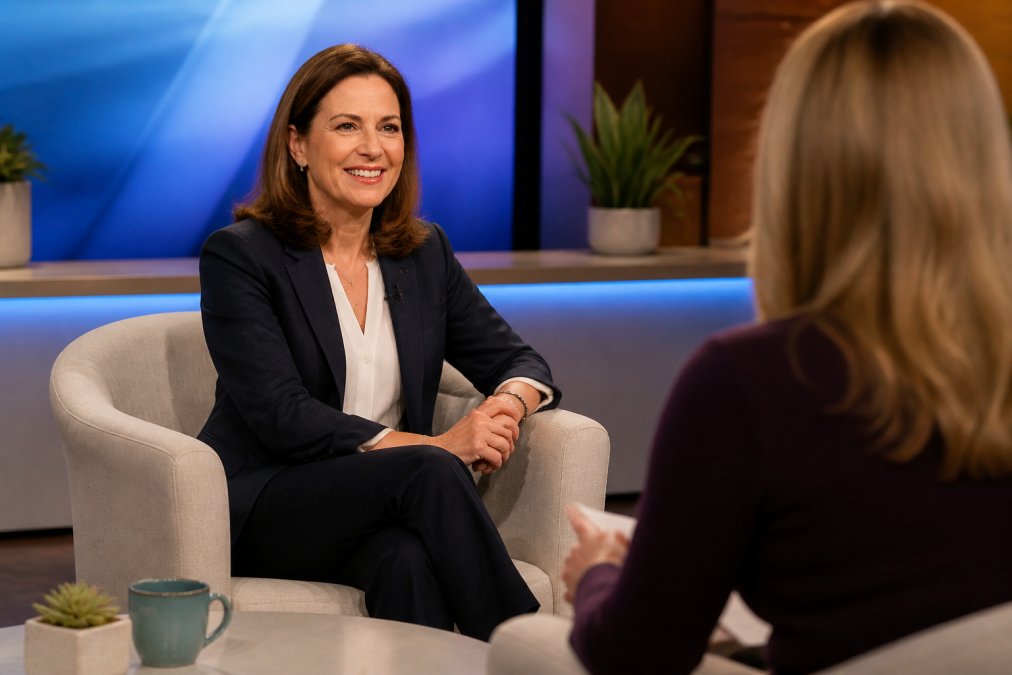
TV interviews for authors require handling time pressure, redirecting off-topic questions, and delivering value in 90 seconds or less.
Understand the Show Format Before You Pitch
Morning shows: Fast-paced, 3-5 minutes. Use bite-sized, visual talking points. News segments: Authority-focused, 2-3 minutes, tied to current events. Prepare 2-3 angles on how your expertise relates to headlines. Podcasts/long-form: 30 minutes to 2 hours. Prepare 5-7 talking points with stories and case studies. Talk shows: Entertainment-focused. Prepare anecdotes and personality alongside expertise.
Develop Talking Points Designed for Interruption
Structure each talking point as a complete thought in 30-45 seconds: headline first, then 1-2 supporting details. If the host interrupts after your headline, you’ve made your point. Example: Headline: “Most founders fail because they optimize for growth before product-market fit.” Detail: “I worked with 200+ startups. The ones that survived spent 6-12 months validating their product with real customers before scaling.” Prepare 3-5 talking points and practice being interrupted mid-point.
Prepare for Hostile or Off-Topic Questions
Prepare for challenging questions by identifying 2-3 that could derail you. Structure your response: (1) acknowledge the question, (2) reframe to your expertise, (3) return to a talking point. Example: “That’s a common belief. But what I’ve found working with 500+ clients is that most people can start investing with $50 per month. The barrier isn’t money, it’s knowing where to start.”
Master the Time Constraint
TV segments are timed to the second. A 3-minute segment gives you roughly 165 seconds after the host’s intro/outro. Practice delivering your headline in 15 seconds, supporting detail in 30 seconds, full talking point in 45 seconds. Answer follow-up questions in 30 seconds, then offer to expand if they want more.
On-Camera Presence: Beyond the Basics
Energy management: Match the show’s tone. Mirror the host’s energy slightly. Hand gestures: Use hands to emphasize points, one gesture per talking point. Breathing: Pause between thoughts; a two-second pause looks natural and gives you time to think. Facial expressions: Show genuine reaction; authenticity reads on camera. Avoid: Plugging your book repeatedly, reading from notes, apologizing for not knowing something, over-explaining, or disagreeing with the host.
Practice with Mock Interviews
Record yourself answering interview questions off-script. Watch and note: Did you deliver your talking point clearly? Stay within time? Use filler words? Match body language to message? Answer the question asked? Do at least two mock interviews before your first TV appearance.
Request a pre-interview call with the host or producer 24 hours before your segment. This is standard practice. Use it to confirm talking points, ask about the format, and clarify timing. A prepared guest is a confident guest.
Local vs. National TV: Where to Start Your Campaign
Your first TV appearance should be local, not national. This is the fastest path to getting booked and building credibility for bigger opportunities.
Why Start Local: The Competitive Advantage
Local TV stations have higher airtime demand (20-30 segment slots weekly vs. 5-10 nationally), faster booking timelines (2-4 weeks vs. 2-3 months), and receive fewer pitches (10-20 vs. 100+). A local credit builds real media experience and reaches your ideal local audience, more valuable than a national appearance to a dispersed audience.
Research Local TV Stations and Shows
Search “[Your City] local news” and visit each station’s website. Watch 2-3 episodes of each morning show, noting segment length, guest types, topics, and host style. Identify the segment producer by checking the website’s “Contact Us” or calling the station directly. Be direct: “I’m an author with expertise in [topic]. Who should I contact about guest opportunities?”
Build Your Local TV Prospect List
Create a spreadsheet with the following columns:
| Show Name | Station | Air Time | Segment Producer | Phone | Topic Fit | Notes | |
|---|---|---|---|---|---|---|---|
| [Morning Show] | [Station] | 7-9 a.m. | [Name] | [Email] | [Phone] | [Yes/No] | [Specific segments they run] |
Fill this out for every local show that could book you. Aim for 5-10 shows in your market. This is your outreach list.
Craft Your Local TV Pitch
Local producers care about relevance to their audience, timeliness, visual interest, and your availability. Pitch structure: Subject line with specific local angle. Opening with your credential. Hook tying your expertise to a local event/trend this week or month. Value statement with concrete benefit. Your availability. Example: “Hi Sarah, I’m Jane Smith, a financial advisor who’s helped 500+ local clients optimize their portfolios.
Outreach Sequence: How to Actually Get Booked
Week 1: Send pitch email (150 words) with media kit on Tuesday-Thursday morning. Week 2: If no response, send brief follow-up. Week 3: Call the station if still no response. Week 4: If no response after email and call, move to the next show. If a producer says “check back in [month],” add them to your follow-up list.
Leverage Local Appearances for National Pitches
After your first local appearance, update your media kit with the credit. Ask the station for a clip and post it on your website and LinkedIn. When pitching national shows, reference your local appearance: “I recently appeared on [Local Station] discussing [topic]. I’d love to bring this to your national audience.”
Timeline: From Local to National
Months 1-2: Research local shows and send pitches. Months 2-3: Land your first local appearance. Months 3-4: Book 2-3 more local appearances. Months 4-6: Pitch regional shows. Months 6-9: With 4-5 credits, pitch national shows. This timeline accelerates with strong breaking news angles.
Local TV is not a consolation prize; it’s a strategic stepping stone. Every national TV appearance you’ll ever get will be easier because you started local and built real media experience.
Build Your Industry Networking and Connections
TV bookings come through relationships. Producers remember guests who perform well and reach out for future segments. Other authors refer producers to you. Industry connections open doors.
Frequently Asked Questions
Do I need a publicist to get on television as an author?
Not necessarily. Many authors successfully pitch themselves directly to local TV and radio stations by understanding what producers need. However, a publicist or media strategist can accelerate the process by having established relationships with segment producers and knowing how to craft pitches that get booked. The key is learning the mechanics of media outreach, whether you do it yourself or hire help depends on your time and budget.
What should I include in my author media kit template?
Your media kit should include a professional headshot, a 50-word bio, 2-3 key talking points related to your book’s topic, your book cover and description, media clips or testimonials if available, and your contact information. The goal is to make a segment producer’s job easier by providing everything they need to pitch you internally. Keep it to one page, visually clean, and focused on what value you bring to their audience, not just your book.
How long does it take to get booked on TV as an author?
Timeline varies widely. Local TV appearances can happen within 2-4 weeks if you pitch effectively and your topic aligns with current events. National television typically takes 2-6 months of consistent pitching and relationship-building. According to 2026 industry guidance, authors who succeed emphasize that becoming a ‘sought-after media guest’ requires understanding the specific needs of the interviewer and audience, not just promoting your book.
Can authors in professional fields like finance or law actually get TV appearances?
Absolutely. Professional service providers, financial advisors, lawyers, doctors, are in high demand on local news and talk shows because they can address timely topics relevant to audiences. The key is pitching yourself as an expert solving a problem, not as someone selling a book. For example, a financial advisor might pitch ‘tax strategies for small business owners’ rather than promoting their book directly. Align your pitch with current events and audience needs.