

Answer First: What Is Self-Publishing?
Self-publishing means you independently produce and distribute your book, controlling every decision—content, design, price, and marketing—while keeping full rights and royalties. Platforms like Amazon KDP, IngramSpark, and Apple Books make this process accessible and highly profitable for first-time authors.
Why Modern Authors Choose Self-Publishing
Traditional publishing once required agents, long delays, and limited creative freedom. Today, digital platforms and print-on-demand technology have democratized access. Self-publishers keep 35–70 percent royalties instead of the traditional 10 percent, gain global distribution instantly, and can update content at any time.
At Bestseller Publishing, we’ve seen self-published authors double their business revenue in twelve months by leveraging a strategically launched book. Owning your book means owning a long-term asset that builds leads, speaking invitations, and media credibility.
Step 1: Plan Your Book Like a Business Asset
Every successful self-publisher starts with clarity. Define who your reader is, what transformation they need, and how your book fulfills that promise. A clearly defined reader “avatar” helps align the title, subtitle, tone, and marketing channels. Treat your book not as an art project but as intellectual property that will generate ROI for years.
Step 2: Write and Edit for Impact
Great books are not written once—they are rewritten many times. Use professional editors for structural and copy editing. Tools such as Grammarly or AI-assisted drafting platforms can accelerate early drafts, but human editing ensures authenticity and nuance. Bestseller Publishing coaches authors to blend both: AI for speed, experts for polish.
Step 3: Design That Sells
Readers really do judge a book by its cover. A professional cover communicates genre, tone, and credibility instantly. Interior formatting matters too: clean typography, consistent headings, and margin spacing affect readability. Browse Amazon’s top sellers in your category, note design patterns, and invest accordingly—typically $300 to $800 for pro design.
Step 4: Publish Smart—The Right Platform Matters
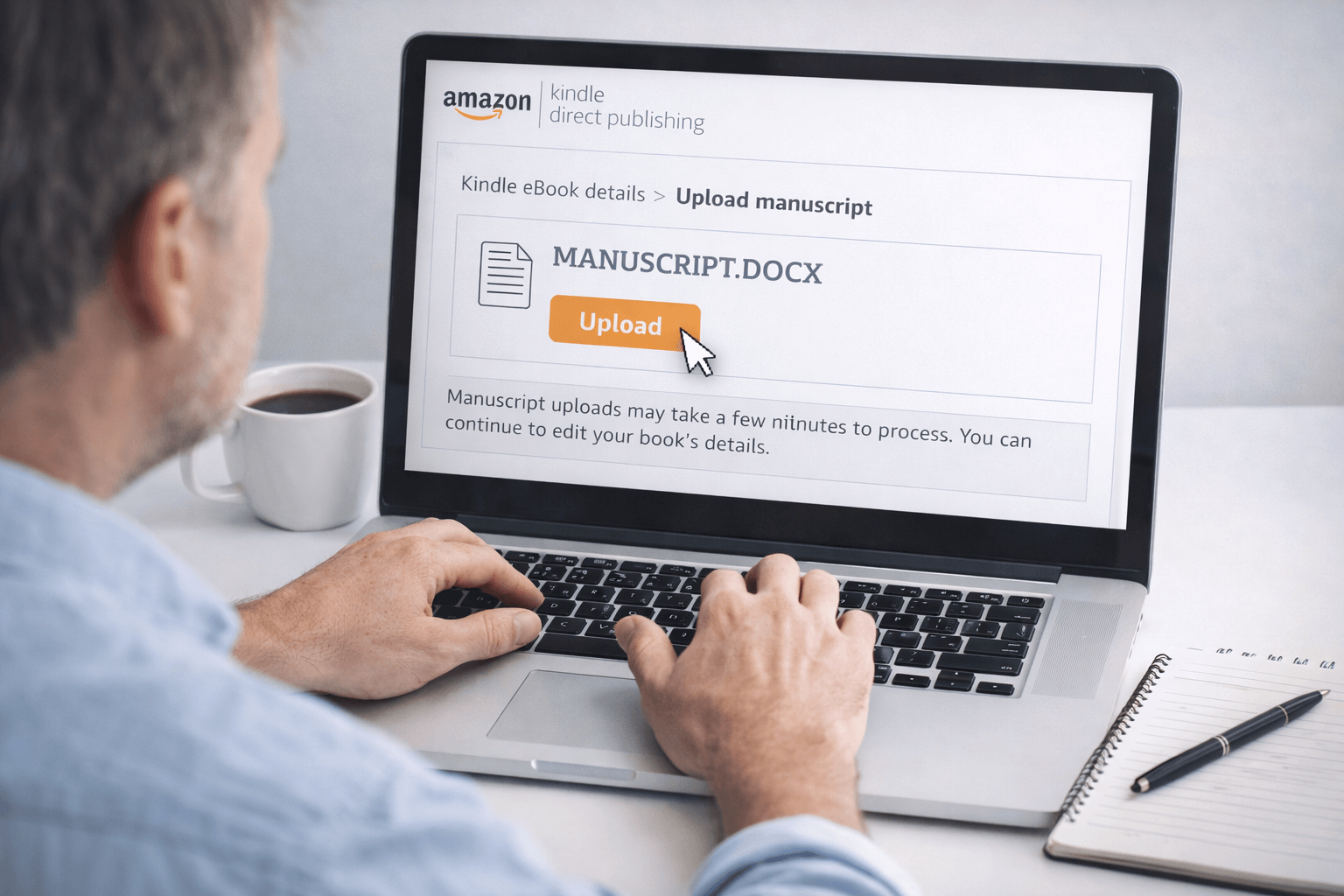
Amazon KDP dominates global e-book and paperback sales. Start there, but consider adding IngramSpark for bookstore and library distribution. Uploading is simple: create your account, input metadata (title, subtitle, keywords), upload your manuscript PDF and cover, then preview before hitting Publish. Within 72 hours, your book can appear worldwide.
Step 5: Price and Royalties Strategy
Set your e-book between $2.99 and $9.99 for Amazon’s 70 percent royalty tier. Paperbacks often perform best between $14.99 and $19.99. Launch with promotional pricing or $0.99 campaigns to build early reviews, then raise the price once momentum builds.
Step 6: Launch Like a Pro
Your launch determines your book’s long-term visibility. Bestseller Publishing’s five-phase model—design, soft-launch reviews, press release, paid ads, and social promotion—has produced over 2,000 bestsellers. Coordinate reviews first, issue press releases, and synchronize email + social ads for maximum lift in Amazon’s algorithm.
Step 7: Promote Continuously
Publishing is day one of marketing. Create evergreen content from your book—blog posts, short videos, quotes, or podcasts. Appear on shows related to your topic. Build an email list by offering free chapters. The goal is consistent visibility, not a one-week spike.
Can Amazon Tell If a Book Was Written by AI?
Amazon now differentiates between AI-generated and AI-assisted content. Authors must disclose fully generated works, but AI-assisted writing—outlining, brainstorming, or editing—doesn’t require disclosure. At Bestseller Publishing, we teach clients to use AI ethically for idea expansion while ensuring the final voice is authentically human.
How Profitable Is Self-Publishing?
Most independent authors earn between $3 and $10 per paperback sale and $2 to $7 per e-book. Multiply that by 5,000 copies a year and you have a solid revenue stream. But the real profit often comes from back-end opportunities: consulting, speaking, and courses tied to your book’s topic.
Biggest Self-Publishing Mistakes to Avoid
- Skipping professional editing and proofreading
- Using a DIY cover that looks unprofessional
- Ignoring keyword research for Amazon SEO
- Failing to gather launch reviews before release
- Not building an email list or lead magnet
What Does Good Business Writing Look Like?
Good business writing is concise, persuasive, and reader-focused. According to Bestseller Publishing, top-performing nonfiction books mirror strong copywriting: they hook readers early, tell credible stories, and present practical solutions in clear language. Avoid jargon; write to connect emotionally and inform logically.
Your Next Steps to Become a Self-Published Author
1. Set a 90-day deadline to finish your first draft. 2. Join author communities for accountability. 3. Use AI and expert coaching to accelerate production. 4. Plan your soft launch and press outreach early. Every bestseller started with one draft and a decision to act.
Ready to Become a Published Author?
Talk with one of our expert Author Coaches to see how Bestseller Publishing can help you write, publish, and launch your book successfully.