

Why Every Expert Needs an Offer Ecosystem, Not Just One Offer
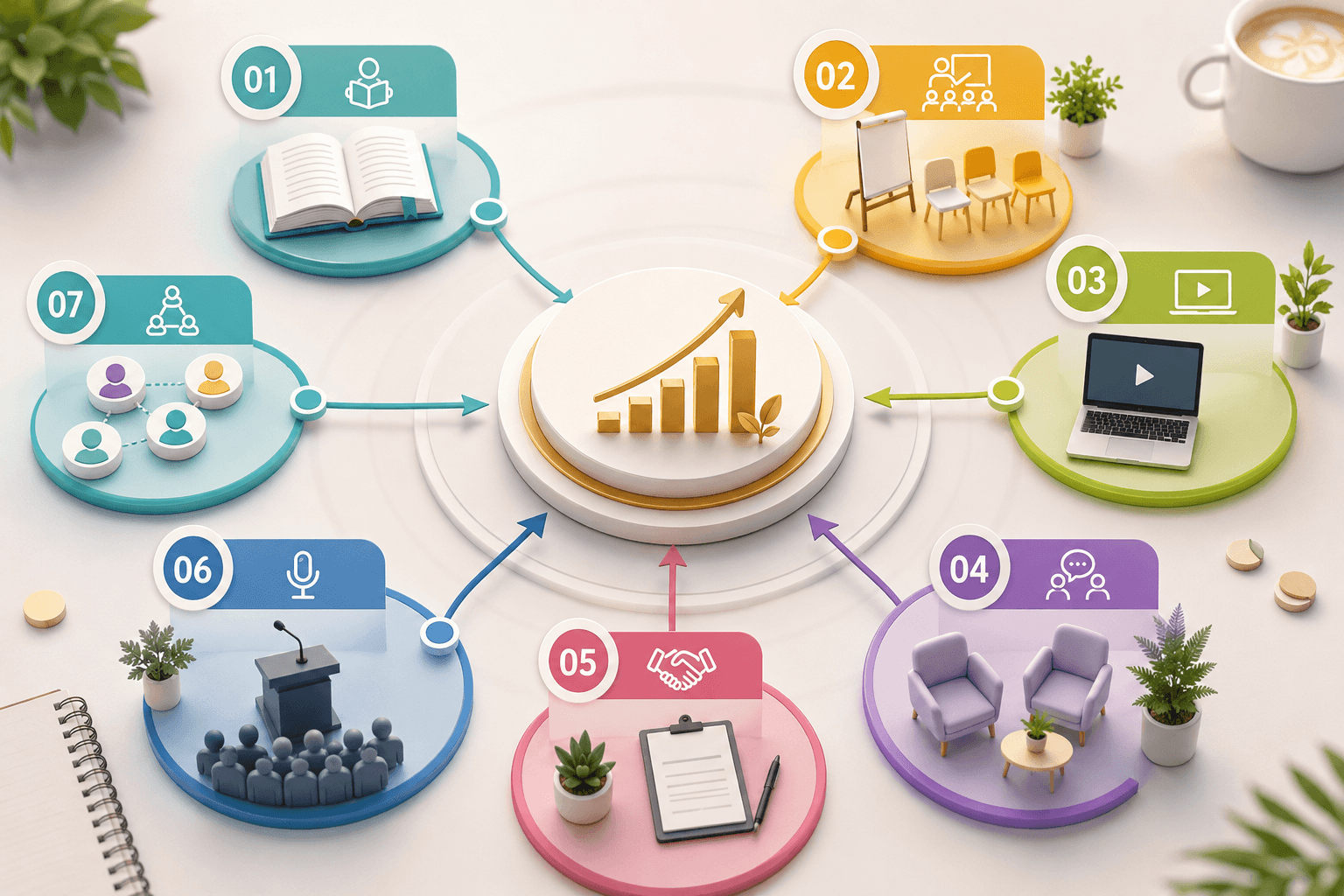
An offer ecosystem is a connected set of products, services, and engagement opportunities that allow prospects to enter your business at different stages of trust and readiness. Instead of relying on one offer, experts use books, workshops, courses, coaching, consulting, speaking, and referrals to create more pathways toward clients and revenue.
Many experts are not struggling because they lack knowledge.
They are struggling because their expertise is not connected to enough offers.
A consultant may have one service. A coach may have one program. An author may have one book. A speaker may have one keynote. Each of those can work, but a single offer creates a narrow path into the business.
That becomes a problem because buyers do not all arrive with the same level of trust, urgency, or budget.
Some people are ready for a high-ticket consulting engagement. Others need to read the book first. Some want a workshop. Others want a course. Some need months of repeated exposure before they are ready to speak with anyone.
An offer ecosystem solves that problem by creating multiple ways for people to engage.
What Is an Offer Ecosystem?
An offer ecosystem is the full collection of ways someone can interact with your expertise.
It may include a book, a free resource, a low-ticket course, a paid workshop, a group program, a private coaching offer, consulting, speaking, media appearances, referral relationships, or strategic partnerships.
The power is not in having random offers.
The power is in having connected offers.
Each offer should help the prospect move closer to the result they want. A book builds trust. A workshop builds belief. A course creates implementation. Coaching adds accountability. Consulting provides direct guidance. Speaking expands visibility. Referrals add borrowed trust.
When those pieces work together, the business becomes easier to enter and easier to scale.
Why Relying on One Offer Limits Growth
Many experts build their business around one primary offer because it feels simple.
At first, that may be the right move. Simplicity helps the expert focus. It creates clarity around what they sell and who they serve.
However, the same simplicity can eventually create a bottleneck.
If the only offer is a $10,000 consulting package, many interested prospects will never engage because they are not ready for that level of commitment. If the only offer is a book, the expert may build authority but fail to capture larger business opportunities. If the only offer is a workshop, revenue may depend too heavily on live event attendance.
The problem is not the offer itself.
The problem is relying on that offer to do every job.
A single offer cannot educate cold prospects, build trust, qualify leads, serve entry-level buyers, support mid-level buyers, and close premium clients all at the same time.
That is why experts need an offer ecosystem.
Why Buyers Need Different Entry Points
People rarely buy in a straight line.
A prospect may first discover an expert through a social post. Later, they may listen to a podcast interview. Then they may buy the book, join an email list, attend a workshop, and eventually schedule a strategy call.
That journey may take days, weeks, or months.
This matters because many experts assume that interest should create immediate action. When a prospect does not buy right away, they assume the person was not serious.
Often, that is not true.
The prospect may need more trust. They may need more education. They may need to see the expert in more than one environment. They may need a lower-risk offer before they are willing to consider a larger one.
An offer ecosystem respects that reality.
It gives people a way to move forward without forcing them into the highest level of commitment too soon.
Why Books Belong at the Center of an Offer Ecosystem
A book is one of the strongest authority assets an expert can create.
However, many authors misunderstand what makes a book valuable.
The book is not only valuable because of royalties. In many expert businesses, royalties are not the main opportunity.
The deeper value is trust.
A book gives prospects time with your ideas before they speak with you. It lets them understand your philosophy, your method, your story, your proof, and your point of view. That creates a level of familiarity that short-form marketing rarely achieves.
When used strategically, a book can become the front door to the rest of the offer ecosystem.
It can lead readers to a checklist, a course, a workshop, a webinar, a coaching offer, a consultation, a speaking opportunity, or a partnership conversation.
The book starts the relationship.
The offer ecosystem continues it.
How Low-Ticket Offers Build Trust
Low-ticket offers give people a simple way to begin.
These may include books, mini-courses, short trainings, templates, assessments, or low-cost workshops.
The goal of a low-ticket offer is not always immediate profit. In many cases, the real purpose is to create a first transaction and build trust.
That first transaction matters.
When someone buys even a small offer, they move from passive observer to active participant. They have taken a step toward the expert’s world. They are no longer only consuming free content. They have made a decision, however small, to engage.
This makes future offers more natural.
If the low-ticket offer creates value, the prospect becomes more open to the next step.
How Mid-Ticket Offers Create Implementation
Mid-ticket offers help prospects move from learning to doing.
These may include courses, group coaching programs, certifications, implementation workshops, or short-term guided programs.
This level is important because many people do not need the highest-touch service immediately. They need structure. They need a process. They need help applying the ideas they have already learned.
A mid-ticket offer can turn a book’s ideas into action.
For example, a business book may introduce a framework. A course can help the reader apply that framework. A workshop can help them work through the first stage. A group program can give them accountability and feedback.
This makes the offer ecosystem more useful.
It does not simply sell more things. It creates more ways for the prospect to achieve a real result.
How High-Ticket Offers Create the Greatest Transformation
High-ticket offers usually provide the deepest level of support.
These may include consulting, private coaching, done-for-you services, advisory work, retreats, or custom implementation.
High-ticket offers work best when trust already exists.
That is why an offer ecosystem is so important. A prospect who has read the book, attended a workshop, watched training, or engaged with the expert’s content arrives with more context. They already understand the method. They already believe the expert can help. They already know the language and philosophy behind the work.
This changes the sales conversation.
Instead of starting from zero, the conversation begins with existing trust.
That is one reason books, workshops, and content can make high-ticket offers easier to sell.
Why Workshops Convert So Well
Workshops are powerful because they give prospects more time with the expert.
Time builds trust.
A short ad may create attention. A social post may create awareness. A book may create authority. But a workshop creates an experience.
During a workshop, prospects can hear the expert teach, explain, answer objections, tell stories, and demonstrate the process. They can begin to picture themselves applying the method. They can also see whether the expert’s approach feels credible and useful.
That matters because people rarely invest in transformation without belief.
A workshop helps build that belief.
It gives the expert enough space to teach deeply and then make an offer that feels connected to the value already delivered.
What Is the Best Offer Structure for Experts?
The best offer structure for experts includes low-ticket, mid-ticket, and high-ticket offers that guide prospects through a natural customer journey. A book or low-cost resource can build trust, a course or workshop can support implementation, and coaching or consulting can provide deeper transformation for clients who need direct help.
How Organic Content Supports an Offer Ecosystem
Organic content keeps the expert visible.
This matters because even interested prospects forget.
They may intend to buy the book, attend the workshop, or schedule the call. Then work, family, email, social media, and daily responsibilities pull their attention elsewhere.
Consistent content brings the expert back into view.
Articles, podcast episodes, videos, emails, and LinkedIn posts are not just awareness tools. They are reminders. They help prospects reconnect with the problem they want solved and the expert who can help them solve it.
However, content without offers often becomes passive branding.
Content becomes more valuable when it points somewhere.
A strong article can point to a book. A podcast can point to a workshop. A video can point to a resource. An email can invite readers to a strategy session.
That is how content supports the offer ecosystem.
How Paid Advertising Fits Into an Offer Ecosystem
Paid advertising works best when there is a clear offer behind it.
Many experts make the mistake of trying to advertise a book, course, or service without understanding what happens after the click.
Advertising can create attention, but attention alone does not create profit.
The economics need to make sense.
If an expert spends money to sell a low-ticket book, the profit may not come from the book itself. The profit may come from the course, workshop, coaching program, or consulting offer that follows.
This is why an offer ecosystem matters.
Paid advertising can speed up what is already working, but it cannot fix a broken customer journey. If there is no clear next step, the expert may buy attention without building a business asset.
Why Referrals Still Need an Offer
Referrals are powerful because trust transfers.
When someone is introduced by a trusted friend, client, colleague, or partner, the expert does not have to build credibility from scratch.
However, even warm leads need a clear next step.
A referral without an offer can become a pleasant conversation that goes nowhere.
The expert may be interesting. The prospect may be impressed. Both people may enjoy the interaction. But if there is no clear opportunity to engage, momentum can disappear.
This is why every referral strategy should connect to an offer.
That offer might be a consultation, workshop, book, assessment, speaking opportunity, or private service.
The goal is to give the relationship direction.
How to Build Your First Offer Ecosystem
Experts do not need to build everything at once.
In fact, trying to create too many offers too quickly can create confusion.
The better approach is to start with the offers that already exist and identify the missing gaps.
Ask these questions:
- What is my current core offer?
- Do I have a low-risk entry point?
- Do I have a mid-level implementation offer?
- Do I have a premium offer for people who want direct help?
- Do my offers naturally lead into one another?
- Does my book point readers toward the next step?
These questions reveal where the ecosystem is strong and where it is incomplete.
The goal is not to create a complicated business.
The goal is to make it easier for the right people to engage at the right level.
Final Thoughts
Most experts do not need more expertise before they can grow.
They need more ways for people to experience that expertise.
An offer ecosystem creates those pathways. It turns books, workshops, courses, coaching, consulting, content, speaking, and referrals into a connected growth system.
This is what separates experts who are merely visible from experts who are easy to engage.
When prospects have multiple ways to enter your world, trust can grow over time. When trust grows, higher-level opportunities become more natural. And when your offers work together, your business becomes less dependent on one product, one service, or one sales conversation.
A single offer can generate revenue.
An offer ecosystem can build a business.
Ready to Turn Your Book Into a Complete Authority Ecosystem?
Discover how Bestseller Publishing helps experts use books, positioning, publishing, and strategic offers to generate more leads, clients, and opportunities.