
How to Create a Media Segment Proposal From Your Book?
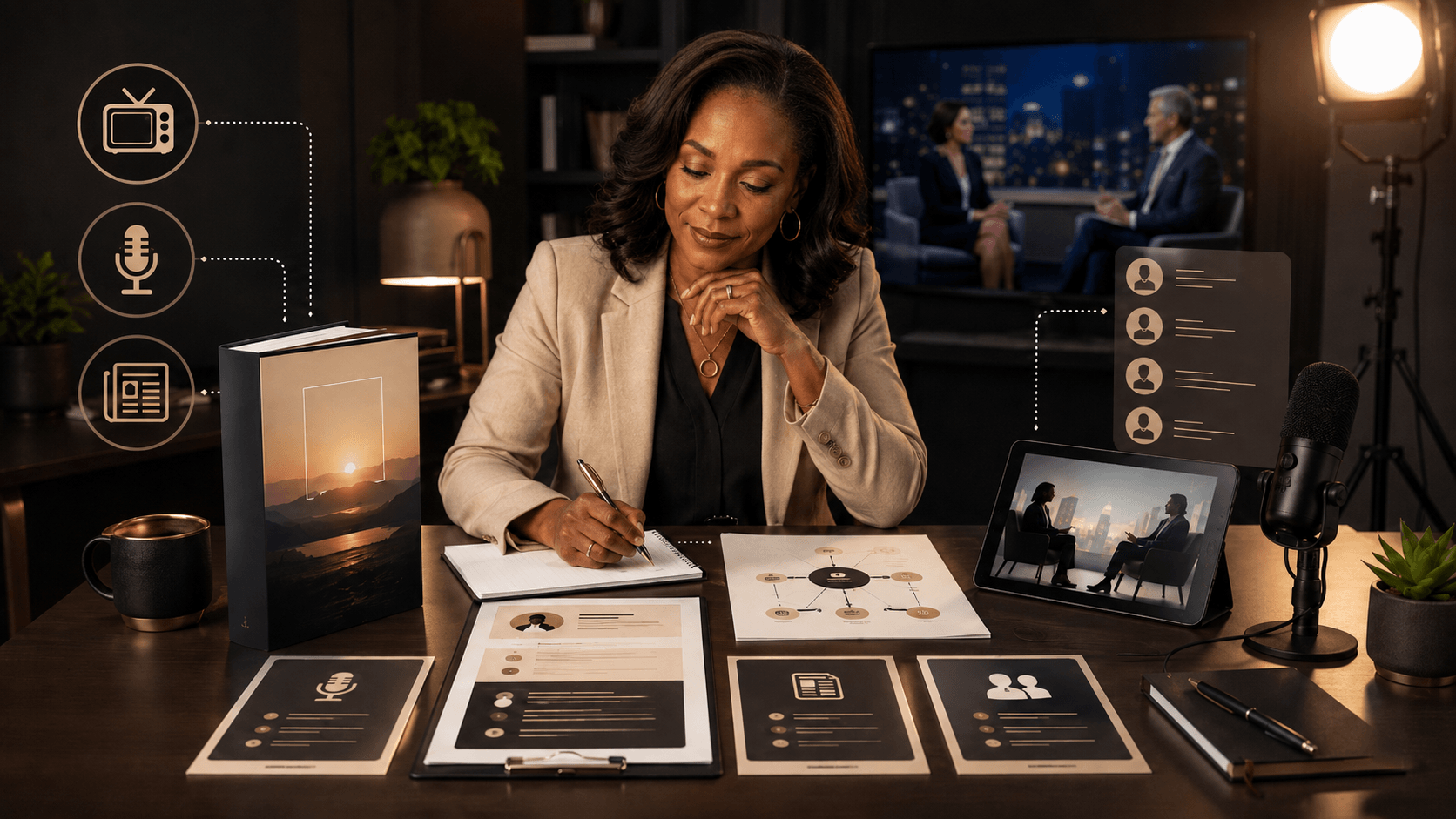
A media segment proposal is a one page pitch document that helps producers, podcast hosts, radio hosts, editors, and event bookers quickly understand why you are credible, why your topic matters now, and what you can talk about on air. To create a media segment proposal from your book, include a strong segment hook, your book cover, your expert bio, your talking points, suggested questions, audience takeaways, contact information, and a clear reason the segment is relevant to the media outlet’s audience.
A book gives you credibility.
But credibility alone does not get you booked.
Media producers, podcast hosts, radio hosts, and TV bookers are busy. They do not want to figure out your topic for you. They do not want to read your entire book before deciding whether you are a fit. They do not want to build the segment from scratch.
They want to know three things quickly.
Are you credible?
Is your topic interesting to their audience?
Are you prepared enough to make the segment easy?
That is why a media segment proposal matters.
At Best Seller Publishing, the Publish. Promote. Profit. framework teaches that a book should become more than a product. Publish creates the authority asset. Promote puts that asset in front of the right audience. Profit happens when the book creates media, speaking, clients, partnerships, credibility, and business growth.
A media segment proposal helps connect the book to the Promote stage because it turns your book into a clear, bookable media opportunity.
What Is a Media Segment Proposal?
A media segment proposal is a short, focused pitch document that presents you as a credible expert and gives the media outlet a ready to use segment idea.
It is sometimes called a one sheet, media one sheet, PR one sheet, or segment pitch sheet.
The goal is simple: make it easy for the producer or host to say yes.
This matters because media outlets are not looking for authors who only want free promotion. They are looking for useful, timely, interesting content for their viewers, listeners, or readers.
The mistake many authors make is pitching the book instead of pitching the segment.
“I wrote a book, will you interview me?” is weak.
“I can help your audience understand three mistakes people are making with this timely issue, and my book gives me the credibility to speak on it,” is much stronger.
Your book supports the proposal. The segment idea opens the door.
Why Producers Need More Than Your Book
Your book proves you have expertise, but a producer still needs to know how that expertise becomes a good segment.
They need a hook. They need talking points. They need questions. They need a quick bio. They need proof that you can speak clearly. They need to understand why their audience should care.
This matters because the easier you make the producer’s job, the stronger your pitch becomes.
The mistake is expecting the producer to do all the thinking. If you make them work too hard, they may move on to another guest who is easier to book.
A media segment proposal shows them that you are not only an author. You are a prepared expert with a clear segment their audience can use.
The Media Segment Proposal Framework
The Media Segment Proposal Framework has six parts: Book, Hook, Look, Bio, Talking Points, and Contact.
Book establishes credibility. Hook makes the topic interesting now. Look makes the proposal feel professional. Bio explains why you are the right expert. Talking Points make the interview easy. Contact gives the producer a clear next step.
1. Book: Use the Book as Your Credibility Asset
Your book is the foundation of the proposal.
It tells the producer that you have organized your ideas, built expertise around a topic, and created a real authority asset.
This matters because producers want to know that you are legitimate. They are protecting their show, audience, reputation, and job. They need to feel confident that if they book you, you can deliver useful content.
The mistake is hiding the book or treating it like a small detail. The book should be visible in your proposal.
Include the book cover. Mention bestseller status if accurate. Include the subtitle if it helps clarify the topic. Add a short “About the Book” section that explains the problem the book solves and who it helps.
The book does not have to be the whole pitch, but it should provide the authority behind the pitch.
2. Hook: Make the Topic Interesting to the Media Audience
The hook is the reason the media outlet should care now.
Your hook should connect your book topic to something timely, emotional, local, useful, surprising, or relevant to the audience.
This matters because producers are not only asking, “Is this person credible?” They are also asking, “Will our audience care?”
A business book may be useful, but a segment on “Three mistakes small business owners are making during uncertain economic times” is more specific and media friendly.
A health book may be valuable, but a segment on “Five wellness myths people believe after 50” gives the audience a clearer reason to pay attention.
A relationship book may be strong, but a segment on “How couples can avoid the same argument every holiday season” feels more timely and specific.
The mistake is making the hook too general.
A strong hook makes the book’s message feel urgent, useful, and easy to understand.
3. Look: Make the Proposal Feel Professional
The look of your media segment proposal matters.
It does not need to be overly designed, but it should feel clean, professional, and easy to scan.
This matters because the proposal is part of your first impression. A messy proposal can make you look unprepared. A polished one can make you look more credible and easier to book.
Use your book cover, professional headshot, brand colors, logo if available, website, and clear section headings.
The mistake is sending a plain document that looks like an unfinished draft. The media world is visual. Even radio and podcast interviews often become video clips, social posts, or YouTube content later.
Your proposal should make you look like someone who is ready to show up professionally.
4. Bio: Position Yourself as the Right Expert
Your bio should not be a long life story.
It should quickly explain why you are the right person to speak on this topic.
This matters because producers need to introduce you clearly. They need to know what makes you credible, what you have done, and how to explain your expertise to the audience.
The mistake is making the bio too broad or too personal without connecting it to the topic.
A strong media bio may include your professional role, book title, bestseller status, relevant experience, media appearances, credentials, business background, client results, or unique point of view.
Keep it short. Make it powerful. Make it relevant.
The bio should answer the question: “Why should this audience listen to this person?”
5. Talking Points: Give the Host Ready Made Questions
Talking points are one of the most important parts of the media segment proposal.
They give the host or producer clear questions they can ask you during the segment.
This matters because hosts do not want to research your entire book. The easier you make the interview, the more attractive you become as a guest.
The mistake is listing vague topics instead of strong questions.
Weak talking point:
“Leadership.”
Stronger talking point:
“What is the biggest leadership mistake business owners make when their team loses trust?”
Weak talking point:
“Health tips.”
Stronger talking point:
“What are three health habits people over 50 should stop ignoring?”
Strong talking points create curiosity and lead to useful answers.
6. Contact: Make the Next Step Obvious
Your media segment proposal should make it easy to contact you or your representative.
Include your name, email, phone number, website, social media links if relevant, and booking contact.
This matters because the proposal may get separated from the email. A producer may print it, forward it, or save it for later. If your contact information is missing, the opportunity can be lost.
The mistake is assuming the producer will search for your contact details.
Do not make them search.
Make the next step obvious.
What to Include in a Media Segment Proposal
A strong media segment proposal should include the following sections:
Segment title.
Short hook or timely angle.
Book cover and short book description.
Author headshot.
Short expert bio.
Three to five talking points or suggested questions.
Audience takeaways.
Relevant credentials or media proof.
Contact information.
Website or book funnel link.
This matters because the producer should be able to understand the segment in less than a minute.
The mistake is turning the proposal into a long press kit. You can have a full media kit elsewhere, but the segment proposal should be simple, clear, and producer friendly.
How to Create the Segment Title
The segment title should sound like something a host could introduce on air.
It should not simply be the book title unless the book title already works as a media segment.
For example, if the book is about healthy aging, the segment title could be:
“Three Myths That Keep People From Aging With Strength”
If the book is about business leadership, the segment title could be:
“Why Good Employees Stop Trusting Their Leaders”
If the book is about writing a book, the segment title could be:
“The Biggest Mistake First Time Authors Make Before They Publish”
This matters because the segment title has to sell the conversation.
The mistake is making the title too clever or too book focused. Media segments need clarity. The audience should immediately understand why they should listen.
How to Find the Right Hook
A strong hook connects your expertise to the audience’s current interest.
There are several types of hooks authors can use.
A timely hook connects your book to something in the news right now.
A local hook connects your book to your city, region, or local success story.
A celebrity hook connects your idea to a public figure or pop culture conversation.
A seasonal hook connects your message to New Year’s, holidays, back to school, summer, tax season, wedding season, or other annual moments.
A problem hook connects your book to a pain point the audience already cares about.
This matters because the hook helps a producer understand why the segment belongs now.
The mistake is using the same hook for every outlet. A local TV station may respond to a local success story. A national podcast may respond to a bigger trend. An industry show may respond to a niche problem.
Match the hook to the outlet.
How to Write Producer Friendly Talking Points
Producer friendly talking points should be specific, simple, and easy to ask out loud.
They should also lead you toward strong answers.
A good format is:
What is the biggest mistake people make with this problem?
Why does this issue matter right now?
What is one myth your book challenges?
What are three steps people can take today?
What should people do if they want to learn more?
This matters because a media segment is short. You may only have three to five minutes. The questions need to move quickly and deliver value fast.
The mistake is including questions that require long explanations or too much background.
Keep the talking points sharp. Make them easy for the host and useful for the audience.
How to Connect the Proposal Back to Your Book
The media segment should not feel like a book commercial.
It should feel like a helpful conversation supported by the book.
This matters because producers do not want a guest who only promotes. They want a guest who teaches, explains, entertains, or helps the audience understand something better.
The mistake is forcing the book into every answer.
A better approach is to let the book be the authority behind the message. Mention it naturally. Use the book’s framework. Pull one or two ideas from the book. Offer a practical takeaway. Then give the host an easy way to mention where people can find it.
Your proposal should show that the book gives the segment depth, but the audience value comes first.
How to Create a Segment Proposal Before the Book Is Finished
You do not always need to wait until the book is fully published to begin building media opportunities.
If you have a strong book concept, professional cover image, clear talking points, and credibility in the topic, you can begin preparing your segment proposal early.
This matters because PR and media momentum can take time. Building the proposal early helps you get ready before launch.
The mistake is waiting until the book is already out before thinking about media.
If you know your message, audience, and hook, you can start shaping your media angle now. Your proposal can evolve as the book is finalized, but the core idea can begin earlier.
How to Use the Proposal in Your Outreach
Your media segment proposal can be used in several ways.
You can attach it to a pitch email.
You can send it after a producer shows interest.
You can include it when mailing a physical copy of your book.
You can give it to a podcast host.
You can use it with TV, radio, blogs, print, and online shows.
You can adapt it for speaking opportunities and webinars.
This matters because the proposal becomes a reusable asset. Once created, it can support many outreach efforts.
The mistake is creating a proposal once and never updating it. If your book connects to new trends, new seasons, or new media angles, refresh the hook and talking points.
Keep the proposal alive.
Should You Send a Video Instead of a Segment Proposal?
Video can help in some situations, especially for speaking engagements.
But for media pitching, a clean segment proposal is often more useful at the beginning.
This matters because producers may not watch a video before they understand the idea. They need to scan the hook, credibility, and talking points first.
The mistake is making the producer work through a long video to figure out whether you are a fit.
A better approach is to send the proposal first. If they want video examples later, you can provide clips, interviews, or short media samples.
How to Start With Smaller Media Markets
Many authors want to start with the biggest shows immediately.
That is understandable, but it may not be the best first step.
Smaller local TV stations, regional radio shows, niche podcasts, blogs, and online shows can help you build experience and proof.
This matters because larger outlets often want to see that you can handle an interview. Smaller appearances can give you clips, confidence, and credibility.
The mistake is ignoring smaller opportunities because they do not feel impressive enough.
A smaller media placement can still help you build your platform, refine your message, and create proof for larger media later.
Common Media Segment Proposal Mistakes
Many authors make the same mistakes when creating a media segment proposal.
They make it too long.
They make it too focused on the book.
They use a weak hook.
They leave out suggested questions.
They do not include a clear audience takeaway.
They forget contact information.
They use an unprofessional headshot.
They send the same proposal to every outlet without adapting the angle.
This matters because a proposal is not only an information sheet. It is a positioning tool.
If it is confusing, cluttered, or generic, it weakens the pitch.
A strong proposal makes you look credible, relevant, prepared, and easy to book.
How This Fits the Publish. Promote. Profit. Framework
A media segment proposal fits directly into the Promote stage of the Publish. Promote. Profit. framework.
Publish creates the book and the authority asset.
Promote turns that authority into visibility by positioning you for TV, radio, podcasts, blogs, print, online shows, and interviews.
Profit happens when media visibility creates new readers, leads, speaking opportunities, strategy sessions, consulting conversations, partnerships, and client opportunities.
Your book gives you credibility.
Your hook gives the media a reason to care.
Your proposal gives producers a reason to say yes.
That is how your book becomes more than a published product.
It becomes a media asset.
Ready to Turn Your Book Into a Media Opportunity?
Your book can help open the door to TV, radio, podcasts, interviews, and bigger authority opportunities when you know how to package your message for the media.
Best Seller Publishing helps experts, entrepreneurs, coaches, consultants, and business owners write, launch, and leverage books through the Publish. Promote. Profit. framework.
Schedule a consultation with Best Seller Publishing and learn how your book can become a stronger authority, visibility, and media asset.