
Strategy Session Application: How to Qualify Book Readers?
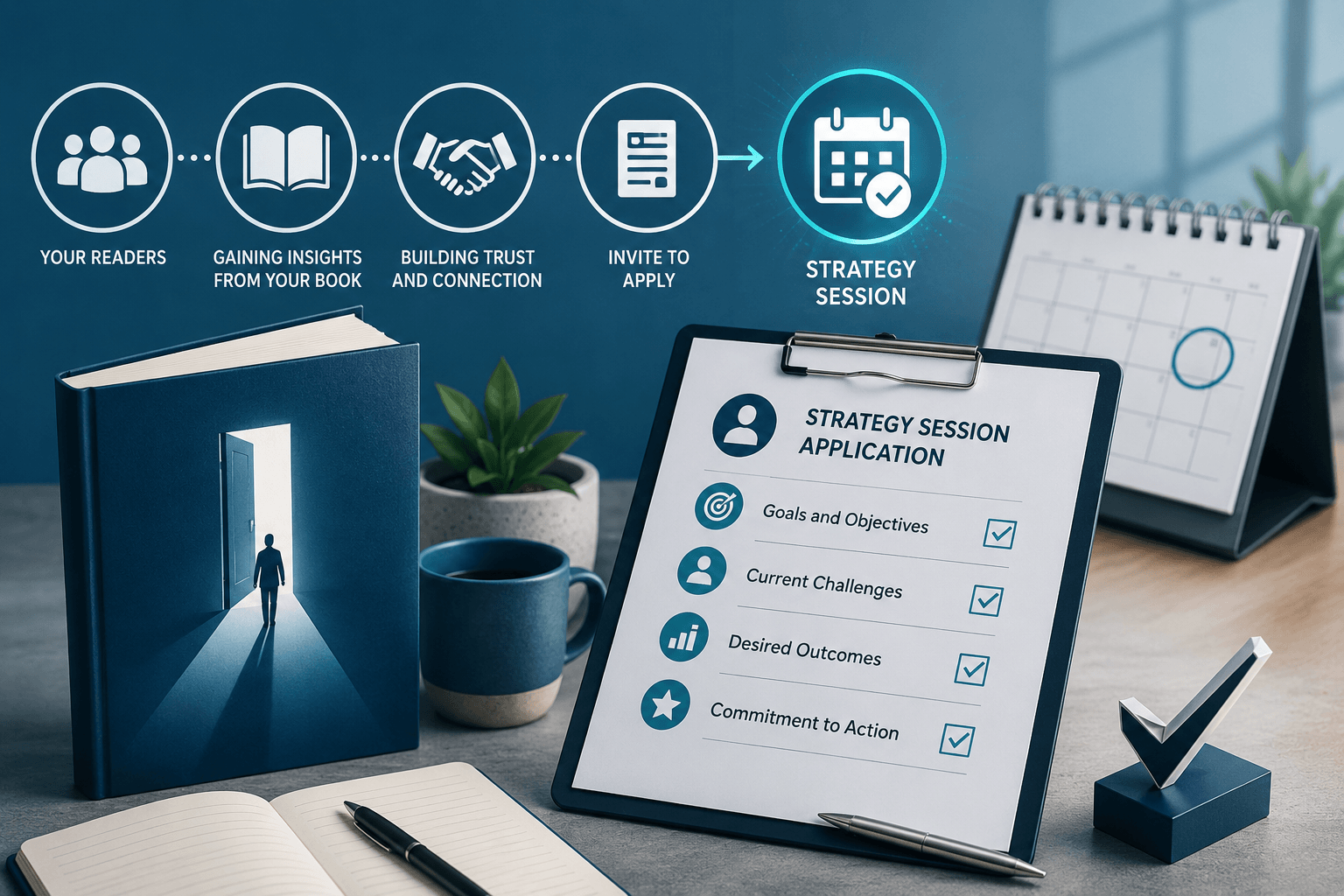
A strategy session application for book readers should qualify the right prospects before they book a call. It should ask what problem they want to solve, what they have already tried, why they are interested now, what outcome they want, and whether they are ready for help. The goal is not to make the process difficult. The goal is to turn book interest into better, more focused sales conversations.
A book can create authority. It can build trust. It can help readers understand your story, your thinking, your framework, and your approach.
But not every reader should become a strategy session prospect.
Some readers are curious. Some are researching. Some want free advice. Some are not ready to act. Some are not a fit for your service, coaching program, consulting offer, workshop, mastermind, or high ticket solution.
That is why a strategy session application matters.
If your book is connected to a larger business goal, the application becomes a bridge between reader interest and qualified conversation. It helps the reader pause, think, and decide whether they are truly ready for the next step. It also helps you protect your calendar and prepare for a better call.
At Best Seller Publishing, the Publish. Promote. Profit. framework teaches that a book should become more than a credibility piece. It should become a business growth asset. The book creates authority. Promotion brings readers into your world. Profit happens when that authority leads to strategy sessions, clients, speaking, media, partnerships, and revenue.
A strategy session application helps make that transition cleaner.
Why Book Readers Need a Qualification Step
Many authors make the mistake of sending every reader directly to a calendar. That may seem simple, but it can create problems.
If anyone can book a call with no context, you may end up with conversations that are not ready, not serious, or not aligned. The reader may not understand your offer. They may not know what kind of help you provide. They may not have the problem you solve. They may only want to ask general questions about the book.
A strategy session should not become a free advice call for every reader.
This matters because your time has value. If your book is designed to lead to a premium offer, the strategy session should be reserved for readers who are a possible fit for that offer.
The mistake is confusing interest with readiness. A reader can like your book and still not be ready for a deeper conversation. A good application helps separate general interest from serious intent.
The business consequence is better call quality. When readers complete an application first, you know more about their goals, their problem, their past attempts, and their level of commitment before the conversation begins.
The Book Reader Application Framework
The Book Reader Application Framework helps authors qualify readers without making the process feel cold or complicated. It has five parts: Context, Problem, Past Attempts, Desired Outcome, and Readiness.
Each part has a job. Context tells you why the reader is applying. Problem shows what they need help with. Past Attempts reveal what they have already tried. Desired Outcome shows where they want to go. Readiness helps you determine whether the strategy session makes sense now.
1. Context: Find Out Why They Are Applying
The first part of a strategy session application should ask why the reader is interested in the call.
This question gives you immediate insight. Did they read the book? Did they attend a webinar? Did they come through a book funnel? Did someone refer them? Did a specific chapter or idea stand out?
For example, you might ask:
“What made you interested in scheduling a strategy session?”
Or:
“Which part of the book or training made you feel this conversation could be useful?”
This matters because it tells you what created the spark. If the reader mentions a specific idea from the book, they are likely more engaged. If they give a vague answer, they may need more nurturing before a call.
The mistake is jumping straight into business questions without understanding the reader’s path. Context helps you know how they arrived and what they already believe.
2. Problem: Identify the Main Issue They Want to Solve
A strategy session application should ask the reader to name the problem they want help solving.
This question should be clear and direct. You want to know what they believe is blocking them right now.
For example:
“What is the main challenge you are trying to solve right now?”
Or:
“What problem made you look for help in this area?”
This matters because the strategy session should be built around a real problem. If the reader cannot explain the issue, they may not be ready for the call. If the problem does not match what you solve, they may not be a fit.
The mistake is assuming every reader has the same need. Your book may attract different types of people. Some may need your service. Some may only need more education. Some may need something you do not provide.
The takeaway is simple. A good application helps you identify whether the reader’s problem matches your offer.
3. Past Attempts: Ask What They Have Already Tried
One of the most important application questions is about past attempts.
Most prospects have already tried something before they reach you. They may have tried other books, courses, coaches, consultants, agencies, software, social media strategies, referrals, ads, or do it yourself solutions.
Ask:
“What have you already tried to solve this problem?”
Or:
“What has worked, what has not worked, and what disappointed you?”
This matters because it reveals the reader’s current beliefs. It also helps you understand the opportunity switch.
The opportunity switch is the moment when a prospect realizes the old vehicle they trusted is not the right path and your approach may be the better vehicle. Your book may start that shift, but the application helps you see where the reader is in that process.
The mistake is ignoring the reader’s history. If you do not know what they have already tried, you may not know what objections, frustrations, or assumptions they are bringing into the call.
The business consequence is stronger preparation. When you know what failed before, you can guide the strategy session with more clarity.
4. Desired Outcome: Clarify What They Want Next
A strong application should ask what the reader wants to accomplish.
This is not only about the problem. It is about the result they are hoping for.
For example:
“What result are you hoping to create in the next 6 to 12 months?”
Or:
“If this strategy session is helpful, what would you want to be clearer on by the end of the call?”
This matters because not every desired outcome fits your offer. Some readers may want a small tip. Some may want a full transformation. Some may want help implementing a bigger strategy.
The mistake is booking calls without knowing what the reader wants. That can lead to scattered conversations. The clearer the outcome, the more focused the call.
The takeaway is that a good application helps both sides understand whether the strategy session is worth having.
5. Readiness: Determine Whether Now Is the Right Time
The final part of a strategy session application should measure readiness.
Readiness is not only about money. It is also about urgency, commitment, timing, responsibility, and willingness to act.
You might ask:
“Why is now the right time to address this?”
Or:
“If we identify the right next step, are you prepared to move forward?”
Or:
“What would make this a priority for you now?”
This matters because many readers are interested, but not ready. They may like the idea of change, but not be ready for the responsibility, investment, or commitment that change requires.
The mistake is treating all interested readers as qualified prospects. Readiness helps you determine who should book now, who should be nurtured, and who may not be a fit.
The business consequence is calendar protection. A readiness question helps reduce calls with people who only want to explore casually.
What Questions Should Be on a Strategy Session Application?
A strategy session application does not need to be long. In many cases, six to ten strong questions are enough.
Here is a simple structure:
1. What made you interested in scheduling a strategy session?
2. Have you read the book, attended a webinar, or completed any related training?
3. What is the main challenge you are trying to solve right now?
4. What have you already tried?
5. What worked, what did not work, and what frustrated you?
6. What outcome are you hoping to create in the next 6 to 12 months?
7. Why is now the right time to address this?
8. What kind of support are you looking for?
9. Are you the decision maker for moving forward?
10. If the strategy session reveals a clear fit, are you open to discussing next steps?
This matters because each question gives you useful context before the call. You do not need to ask everything, but you should ask enough to understand fit.
The mistake is asking only basic contact information. Name, email, and phone number are necessary, but they do not qualify the reader.
How to Keep the Application From Feeling Too Heavy
A strategy session application should feel serious, but not overwhelming.
If the form is too long, readers may abandon it. If it is too short, it may not qualify them. The goal is balance.
Use clear questions. Avoid confusing language. Do not make every question feel like an essay. Give readers enough room to answer honestly, but do not make the process feel like a test.
This matters because the application is part of the reader experience. If the form feels helpful and focused, it reinforces trust. If it feels cold or demanding, it can create friction.
The mistake is making qualification feel like rejection. The tone should be respectful. You are not trying to scare people away. You are helping determine whether the call is the right next step.
The takeaway is that your application should feel like the beginning of a serious conversation.
Where to Place the Application in Your Book Funnel
The strategy session application should usually appear after the reader has received value.
That value may come from the book, a bonus chapter, a reader worksheet, an assessment, a webinar, or an email sequence. The reader should understand enough about your thinking before being asked to apply.
A simple book funnel might look like this:
Book or book offer, then reader bonus, then email nurture, then webinar or training, then strategy session application.
Another version might be:
Book, then end of book CTA, then application page, then qualified calendar booking.
This matters because the application works best when the reader has context. If you ask too soon, the reader may not understand why the strategy session matters. If you wait too long, you may lose qualified interest.
The mistake is sending cold readers directly to an application with no explanation. A better approach is to use the book and funnel to warm them up first.
How to Use the Application Before the Call
The application should not just collect information. It should shape the strategy session.
Before the call, review the reader’s answers. Look for the problem, past attempts, desired outcome, urgency, and fit. Notice the language they use. Notice whether they take ownership or blame everything outside themselves. Notice whether they understand the problem or still need more education.
This matters because the application gives you a better starting point. You do not need to spend the first half of the call discovering basic information. You can begin with more context.
The mistake is asking applicants to complete a form and then ignoring their answers. If you ask the questions, use the answers.
The business consequence is a more focused call. You can diagnose faster, ask better follow up questions, and determine fit more confidently.
How to Decide Who Gets a Strategy Session
Not every applicant should be accepted for a strategy session.
Some readers may need more education first. Some may not be ready. Some may not have the right problem. Some may not fit your offer. Some may be better served by a lower level resource, email sequence, webinar, or referral.
This matters because strategy sessions should be valuable for both sides. If the reader is not a fit, accepting the call may waste their time and yours.
The mistake is accepting every call because you want more opportunities. More calls are not always better. Better calls are better.
A simple scoring system can help. You can rate applicants based on problem fit, urgency, past attempts, desired outcome, decision making power, and readiness to move forward.
The takeaway is that qualification improves quality. It does not reduce opportunity. It helps you focus on the right opportunity.
How to Follow Up With Readers Who Are Not Ready
A reader who is not ready for a strategy session is not necessarily a bad lead.
They may need more time, more trust, more education, or more proof. They may be early in the decision process. They may be interested but not ready to act.
This is where your owned traffic becomes valuable. If they are on your email list, you can continue serving them. Send helpful content, invite them to webinars, share case studies, answer common questions, and give them opportunities to reapply when the timing is better.
This matters because many prospects do not buy immediately. Some people follow for months or years before taking the next step.
The mistake is treating unqualified applicants as useless. If they are aligned but not ready, nurture them.
The business consequence is long term lead value. A thoughtful follow up system can turn today’s not yet into a future qualified strategy session.
How This Fits the Publish. Promote. Profit. Framework
A strategy session application fits directly into the Profit stage of the Publish. Promote. Profit. framework.
Publish creates the authority asset. Your book gives readers a reason to trust you.
Promote brings readers into your world through traffic, book funnels, webinars, content, ads, partnerships, and email follow up.
Profit happens when the right readers become qualified prospects, strategy session applicants, clients, speaking opportunities, partnerships, and revenue.
The application helps connect the book to the business. It turns reader interest into structured qualification. It helps you understand who is serious, who is ready, and who may need more nurturing.
If you want your book to create better client conversations, do not simply send every reader to a calendar. Build a strategy session application that asks the right questions, protects your time, and helps the reader take the next step with clarity.
Your book opens the door.
Your funnel continues the relationship.
Your application qualifies the reader.
Your strategy session turns the right reader into a real business conversation.
Ready to Turn Book Readers Into Better Strategy Sessions?
Your book should help the right readers understand your value, raise their hand, and move into a qualified conversation when they are ready.
Best Seller Publishing helps experts, entrepreneurs, coaches, consultants, and business owners write, launch, and leverage books through the Publish. Promote. Profit. framework.
Schedule a consultation with Best Seller Publishing and learn how your book can become a stronger authority, lead generation, and client acquisition asset.