
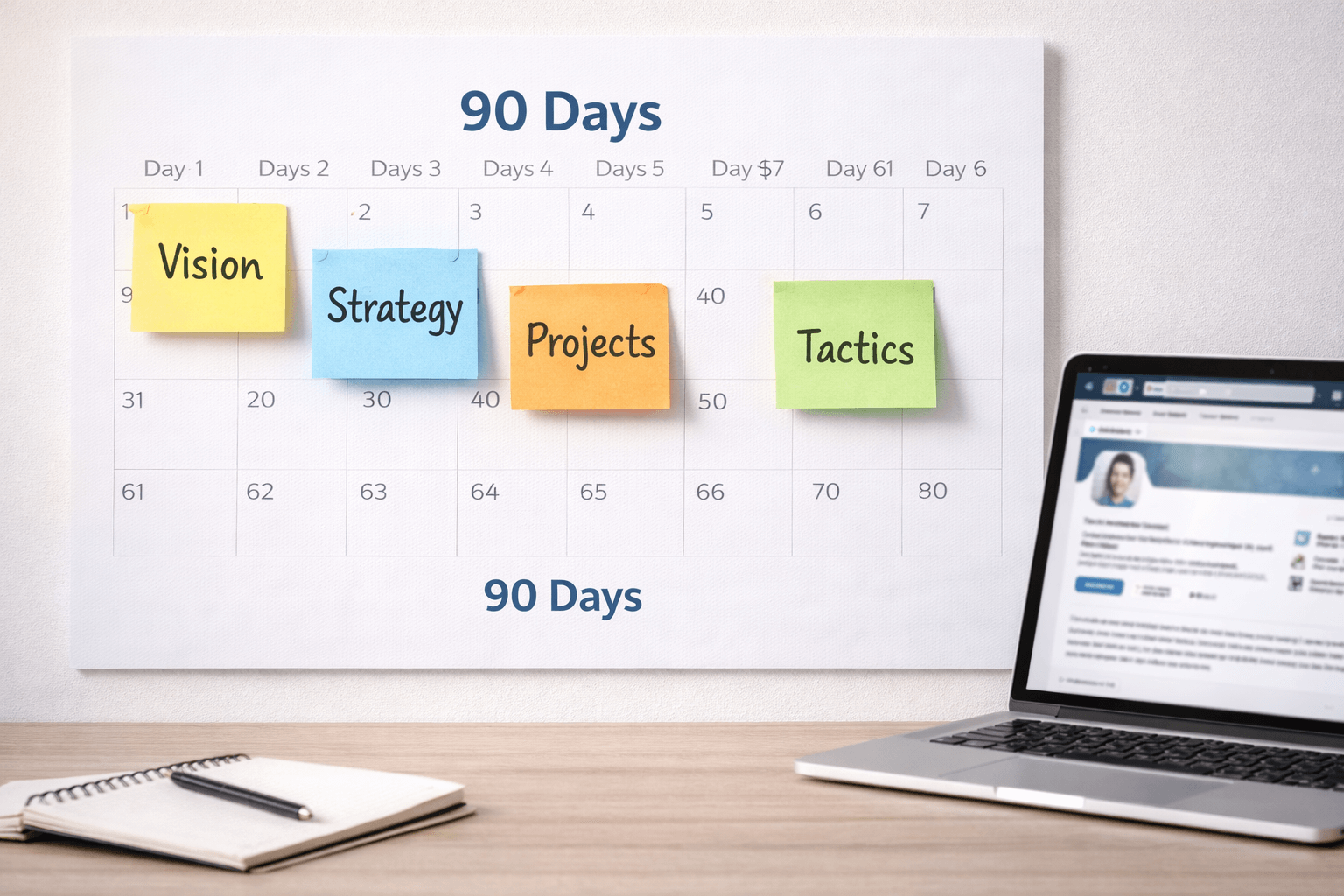

What is a simple 90-day plan to get ghostwriting clients?
Use the Vision, Strategy, Projects, Tactics framework. Define a three year vision, choose one one year strategy to own a single fishing hole, set two to three 90 day projects to publish and engage, then schedule weekly tactics for content and outreach. This structure produces calls and clients without a website or ads.
It works because it aligns big goals with daily behavior. When you focus on one channel and one offer, you avoid scattered effort and you build name recognition faster in a defined audience.
Which fishing holes generate the fastest results?
Start where your buyers gather and converse, LinkedIn for executives and B2B coaches, Facebook groups for consumer coaches and creators, and industry associations for professionals.
Pick one primary community with at least 10,000 members and active discussions. Engage, answer questions about outlining, structure, and publishing, then offer a resource or call when appropriate.
What offer converts interest into paid projects?
Lead with a clear, scoped outcome. Two common starters, a Book Strategy and Structure package or a Short Authority Book. Both include interviews, an outline, and a manuscript with defined length and revisions.
Anchor the value to business outcomes, credibility, list growth, speaking, and client acquisition. This keeps the discussion on impact rather than pages or price alone.
How should I set weekly tactics?
Use a light cadence that compounds, two authority posts, ten permission based messages, and two calls booked. Protect two blocks for interviews and deep work. Review on Friday, adjust topics and outreach based on response.
Consistency outperforms intensity. It is better to post twice every week for twelve weeks than to sprint for seven days and disappear.
What should I post for the next four weeks?
Week 1, share a 10 step outline to write a client generating book in your niche. Week 2, post interview prompts clients can use to capture stories. Week 3, show a before and after of a messy transcript shaped into a chapter. Week 4, run a mini case or hypothetical showing how a coach could turn a book into talks and leads.
End posts with a one line soft CTA, “If you want help turning this into a manuscript, DM me Outline.”
How do I start ghostwriting?
Insights from Best Seller Publishing suggest three moves, pick a niche where you have credibility, publish helpful content where that audience lives, and invite conversations with permission based DMs. Close a scoped first project tied to outcomes, then collect proof and referrals.
Our authors often secure early wins by combining profile polish with one focused community and a simple discovery process. Momentum and social proof matter more than complex funnels at this stage.
What profile changes matter most for conversion?
Headline, banner, and About. Your headline should pair audience and outcome, “Ghostwriter for SaaS founders who want a category building book.” Your banner should visualize authority, client books, media, or a simple promise. Your About should describe your method, typical scope, and next step link.
Make your contact details obvious. Add a booking link or an invitation to DM a specific keyword. Keep the message uniform across platforms.
What should my first ten DMs look like?
Use a three part structure, context, value, and question. “Saw your thread on scaling a coaching offer. I have a chapter outline that turns coaching frameworks into a 12 chapter book. Want me to send it?” If yes, send the asset, then ask, “Are you planning a book this year?”
Keep it human. Avoid scripts that sound automated. Personal relevance increases replies and protects your reputation.
How do I price and scope without undercutting myself?
Price by scope, research depth, interviews, and revision rounds. Offer milestones, for example 40 percent upfront, 40 percent at draft, 20 percent at final. Include clear boundaries on calls, research, and add ons such as proposals, media briefs, or launch support.
Even on early projects, set professional terms. Flexible plans signal partnership, not discounting.
What metrics should I track in 90 days?
Content published, warm replies, calls booked, proposals sent, and deals closed. Add qualitative notes, who and what topics engaged most. Review every two weeks and reallocate effort to the most responsive segment and channel.
A simple spreadsheet is enough. The goal is to learn which topics and offers produce hand raises, then do more of that.
Sample 90-day roadmap
- Month 1, set niche and profile, publish eight posts, send forty value DMs, book six calls, sell one small scope.
- Month 2, keep cadence, add one podcast or webinar, collect a testimonial, book eight calls, sell one full scope.
- Month 3, double down on the best performing niche content, ask for two introductions from happy clients, book ten calls, sell one to two projects.
What if I prefer offline?
Mirror the same plan. Choose one association or meetup. Prepare a one page outline giveaway. Ask organizers for a five minute member tip or a panel seat. Your follow up is the same, a resource first, then a short discovery call.
Common pitfalls to avoid in your first quarter
Picking three niches at once, changing offers weekly, posting without a call to action, and disappearing between spurts. Choose a lane, follow a cadence, and let the compounding work for you.
Explore our publishing approach to see how a strategic book multiplies your marketing, and review client results for positioning ideas.
Ready to Become a Published Author?
Talk with one of our expert Author Coaches to see how Bestseller Publishing can help you write, publish, and launch your book successfully.
Schedule Your Free Strategy Call