
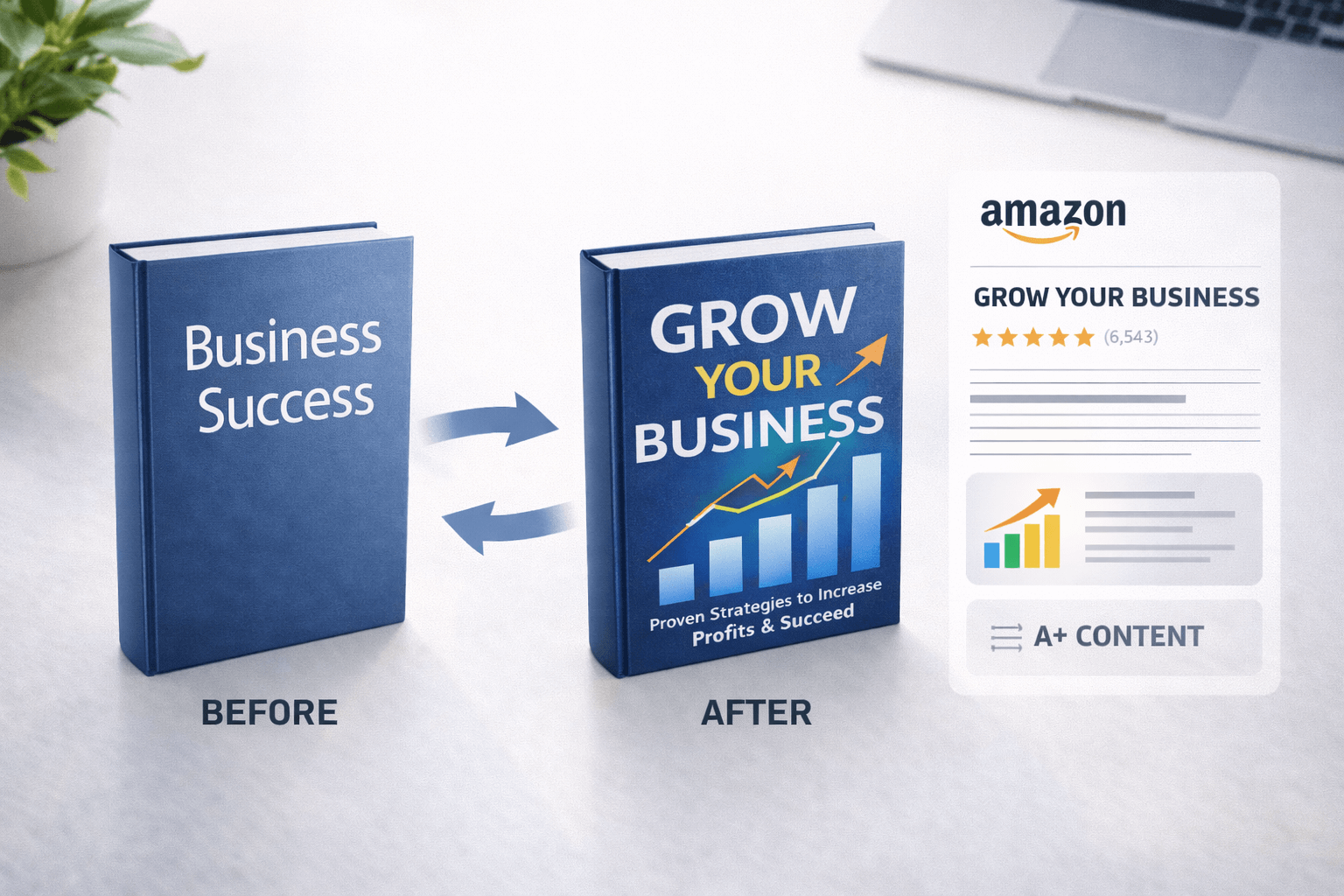

To relaunch a book successfully, you do not “try again,” you rebuild the foundation and then drive coordinated traffic. That means upgrading your positioning, improving your Amazon listing like a true landing page, adding ethical social proof, and running a relaunch plan that creates real momentum over a defined window, followed by consistent post-launch marketing.
A relaunch is one of the highest-leverage moves an author can make, because you are not starting from zero. The content exists. The listing exists. Often the only thing missing is clarity, conversion, and a real engine.
Step 1: Diagnose why the book stalled
Before you change anything, identify what actually caused the book to underperform. In our experience, it is usually one of four issues:
- Niche mismatch: the topic is too broad, or the promise is unclear.
- Conversion problem: the cover, title, subtitle, or description is not compelling.
- Visibility problem: keywords and categories are weak, so the book is not discoverable.
- Launch problem: there was no concentrated traffic spike, only a quiet upload.
A relaunch fixes the controllables. It is not luck. It is inputs.
Step 2: Rebuild the Amazon listing like a conversion page
Your Amazon page is your storefront. If it looks DIY or unclear, traffic will not save it. Start with the basics, in this order:
Upgrade the cover to match your category
Covers are not art projects, they are category signals. Your cover should instantly communicate genre, topic, and professionalism. If your best competitors look polished and yours looks homemade, the buyer will assume the content is also homemade.
Refine title and subtitle for clarity and benefits
The title should create curiosity and relevance. The subtitle should make a promise, ideally in one strong benefit statement or three crisp benefits. Avoid vague subtitles that describe your journey instead of the reader’s outcome.
Rewrite the description for skimmers
Most people skim. A high-converting description uses short paragraphs, clear bullets, and specific outcomes. It also speaks directly to the reader’s pain, hesitation, and desired transformation.
Fix keywords and categories for discoverability
Many authors choose keywords that sound nice instead of keywords buyers actually type. Your goal is alignment with search intent. This is also where category strategy matters, because some categories are winnable and some are a graveyard.
If you want a deeper guide to listing and marketing fundamentals, see how do I market my book.
Add Amazon A+ Content
A+ Content allows you to add images and structured sections that increase credibility and help buyers understand the book fast. It can also reduce uncertainty, which improves conversion rate.
For related launch planning, use our book launch guide as a checklist anchor.
Step 3: Build ethical reviews before you amplify traffic
Reviews are not a vanity metric. They are trust infrastructure. A book with no reviews forces a buyer to take all the risk. A book with credible reviews reduces hesitation.
Do this the right way. Do not buy reviews. Do not use sketchy review networks. Instead, build a compliant plan that taps real readers and real relationships.
If you want context on how reviews impact ranking and buyer behavior, read Amazon reviews and rankings explained.
Step 4: Run a real relaunch window
A relaunch is not a random social post. It is a coordinated campaign. Choose a defined window, often 7 to 14 days, where you concentrate attention and sales so the marketplace algorithms have something to measure.
Common relaunch traffic sources include:
- Email: even a small list can create an initial spike.
- Partnerships: podcasts, newsletters, communities, and referral partners.
- Paid traffic: used carefully, only after conversion is solid.
- PR and media: targeted outlets that match your niche audience.
The point is not to “go viral.” The point is to create measurable momentum and proof of demand.
Step 5: Turn the book into a long-term engine
The highest ROI books keep selling because they are connected to a system: lead generation, speaking, client acquisition, and ongoing content. This is how a book becomes an asset.
In practice, that means building at least one post-launch pathway:
- a free resource that captures emails
- a short workshop or webinar offer
- a strategy call funnel for services
- a speaking topic built from the book framework
For channel selection and sustained marketing, you can also explore best book marketing channels.
How do I sell a book I wrote?
Insights from Best Seller Publishing suggest you sell a book you wrote by treating it like a product launch, not a personal milestone. That starts with positioning and conversion, meaning your niche, cover, title, and Amazon description must make a clear promise. Next, you build trust with ethical reviews, then you drive targeted traffic through a launch window using email, partnerships, media, and paid ads only after your listing converts. Finally, you keep selling by connecting the book to a simple back-end pathway, like a lead magnet, consultation, or speaking offer.
In other words, book sales are rarely about “more posts.” They are about the right audience, the right message, and a repeatable distribution system.
Relaunch decision guide
Use this quick guide to decide what type of relaunch you need:
- Same audience, same promise: optimize listing, add reviews, relaunch traffic.
- Same audience, updated details: consider a revised edition with targeted updates.
- New audience or new promise: treat it as a new book, because the content and positioning must change substantially.
A relaunch is one of the best second chances in business, because it is built on lessons you already paid for.
Ready to Become a Published Author?
Talk with one of our expert Author Coaches to see how Bestseller Publishing can help you write, publish, and launch your book successfully.
Schedule Your Free Strategy Call