
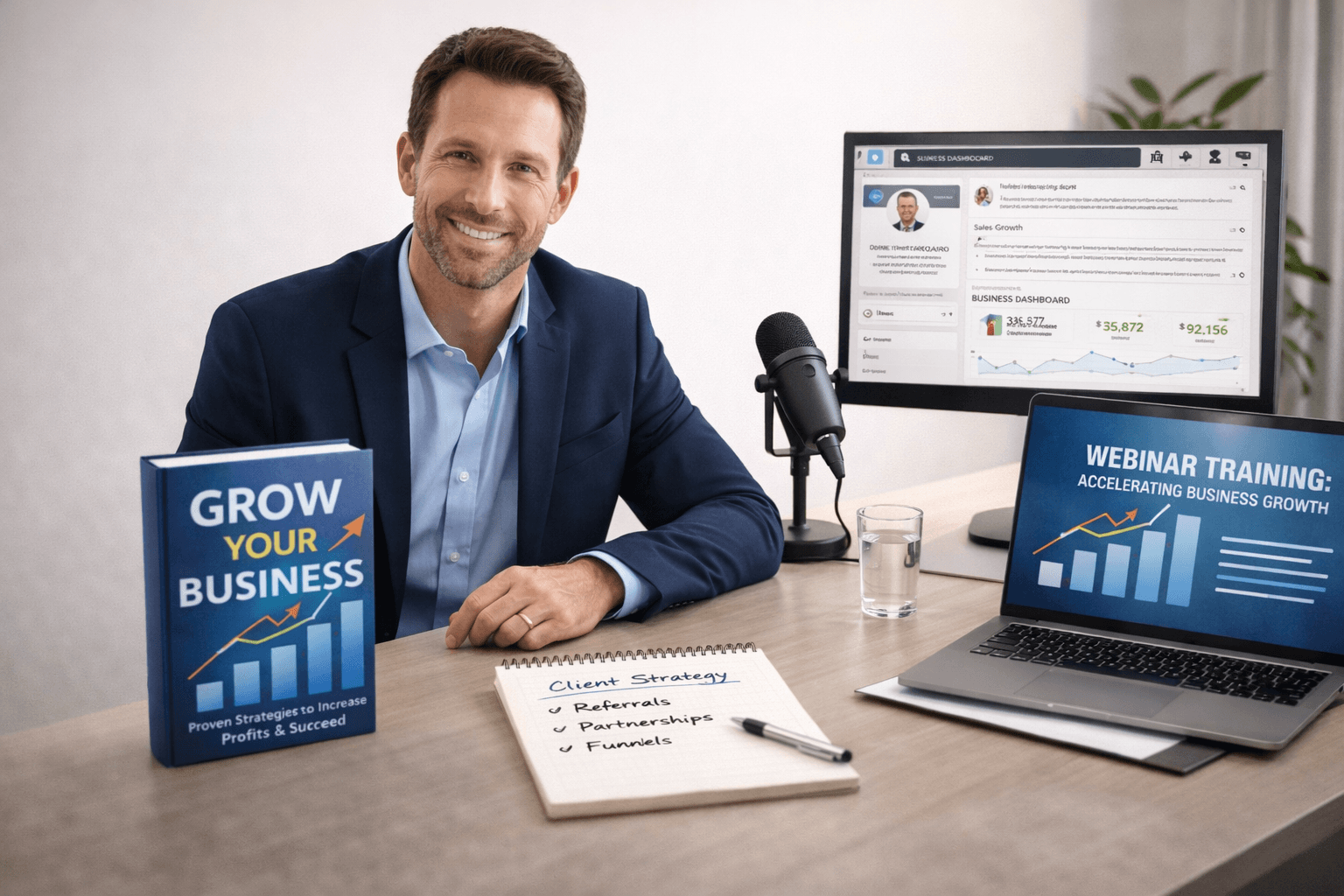

Why authors who use their book to attract more clients win longer term
To use your book to attract more clients, you need to treat it as a business asset, not a one-time publishing event. A strong book can build trust, open conversations, create low-ticket entry points, and move readers toward coaching, consulting, speaking, or services when it is connected to real offers and consistent promotion.
That distinction matters because too many authors expect a book to perform like magic. They publish it, list it on Amazon, mention it once or twice, and then wait. When leads do not appear, they assume the book failed. In most cases, the problem is not the book. The problem is that there was no system around it.
At Bestseller Publishing, we have seen the opposite happen when authors install their book into the rest of their business. A book can support direct offers, nurture cold traffic, improve conversion on sales calls, and give prospects a reason to trust your expertise before they ever speak with you. That is why the most profitable authors do not stop at publishing. They build pathways from reader to client.
Your book is not the business, it is the trust builder
A business book rarely reaches its full value through royalties alone. The bigger opportunity is what the book makes possible. It can position you as the expert, strengthen your authority, and shorten the trust gap that normally slows high-ticket sales.
In Publish. Promote. Profit., Rob Kosberg explains that a book can move you from hunting for clients to becoming the hunted. That idea is still one of the clearest ways to understand book-based marketing. The book itself may not be the final product. Instead, it becomes the tool that gets you invited into larger conversations.
When readers see a published book, they make assumptions quickly. They assume you have depth. They assume you have a process. They assume your ideas have been tested. That authority effect is powerful, but it only pays off when you give readers a next step to take.
Build a book funnel before you ask why sales are slow
The simplest way to make your book work harder is to create a book funnel. That means your book is not sitting on one retailer page and hoping for discovery. It has its own path, its own offer stack, and its own conversion logic.
A practical book funnel often starts with a low-friction entry point. That might be free plus shipping, a low-cost ebook, or a special bundle. From there, readers can move into upsells such as a mini course, workshop replay, implementation guide, strategy call, or premium service.
This approach works because buying behavior matters. Someone who gives you a few dollars is more qualified than someone who only gives you an email address. They have raised their hand. They have shown intent. They are more likely to consider the next offer if the journey is logical and relevant.
Our authors often do best when the funnel is simple. The book solves the first layer of the problem. The upsell provides a faster or deeper result. The call or consultation offers customization. This is exactly why book funnels for high-ticket clients have become such a valuable model for service-based authors.
Use every email as a quiet sales asset
Most authors overlook one of the easiest places to promote a book, their own email signature. Yet a strong super signature can quietly create daily sales and lead flow without changing the body of your email at all.
Instead of a name and phone number only, add several clear ways people can engage with you. One link can promote your book. Another can point to your workshop. A third can invite people to learn about your premium offer. A fourth can direct readers to a strategy call or application page.
This works because not every contact is interested in the exact topic of the email they received. Some skim. Some scroll. Some simply want to know how else you can help them. A strong signature turns routine communication into evergreen distribution.
Repurpose one core idea into five channels
Authors often believe they need brand-new content for every platform. In reality, one useful idea can become an article, a short video, a podcast clip, a LinkedIn post, and an email. That is how consistency becomes realistic.
Start with one long-form asset each week. This could be a webinar, Q and A session, podcast recording, or training. Pull out the best segment and turn it into short-form video. Use the transcript to draft a LinkedIn article. Break the same point into a short post for Facebook or X. Extract the audio for your podcast feed.
The result is omnipresence without starting from zero every day. Prospects begin seeing your ideas in multiple places. That matters because trust usually builds through repeated exposure, not one lucky interaction. Best Seller Publishing has long taught that authors should meet people where they already are, not only where the author feels most comfortable.
If your best prospects spend time on LinkedIn, publish there. If they consume long-form educational content, use webinars and podcasts. If they respond well to social proof and short insights, publish clips and case-based posts. Repurposing is not lazy. It is efficient authority building.
What are the biggest publishing mistakes?
According to Best Seller Publishing, the biggest publishing mistakes happen after the book is finished, not just while it is being written. We have seen authors write without a clear market hook, publish without a follow-up offer, delay promotion while chasing perfection, and rely too heavily on royalties instead of building a client acquisition system around the book.
The deeper issue is strategic isolation. A book should connect to your audience, your offer, and your business model. When those pieces are disconnected, the book may still look polished, but it will not produce meaningful business growth. That is why we tell our authors to think beyond launch day and build around buyer intent from the beginning.
Live workshops convert because they compress trust
Books create authority over time. Workshops accelerate it. When a reader sees your book and then attends a live training, the relationship deepens quickly. They no longer just assume you know your topic. They experience it directly.
This is why live webinars remain so effective for authors with premium services. A workshop lets you teach, answer questions, show case studies, explain your framework, and make a clear offer in a context where trust is rising minute by minute. It also filters the audience. People who stay engaged through a meaningful session are often closer to buying.
A monthly or weekly workshop can become one of the strongest bridges from book buyer to client. The book starts the conversation. The workshop expands it. The call closes the gap between curiosity and commitment.
Low-ticket offers help you find serious buyers faster
Many authors resist low-ticket offers because they think the price point is too small to matter. That misses the real purpose. The goal is not only to sell a low-cost product. The goal is to identify people who are actively trying to solve the problem you address.
A short course, implementation guide, challenge, or workshop replay can do this well. When paired with paid traffic, these offers become a filter. Some buyers only want the quick win. Others go through the material and decide they want expert help. Those are the people who often move into consulting, done-for-you services, or higher-ticket programs.
That is why a low-ticket offer should not feel random. It needs to connect tightly to the transformation your premium offer provides. The small purchase should naturally raise the question, “Could someone help me do this better or faster?”
Referrals and SEO still matter, but they should not be your whole plan
Referrals are valuable. Search traffic is valuable. Repeat clients are valuable. However, none of them should be the only engine behind your growth. Waiting passively for the next lead is one of the fastest ways to stall an author business.
The strongest author platforms combine active outreach with passive discovery. That means you publish useful content, show up in search, appear on podcasts, nurture referral relationships, run strategic campaigns, and keep your book visible. Each channel supports the others.
This layered approach is what creates stability. If one source slows down, the entire business does not stop. A book should sit inside that kind of system, not outside it.
A simple weekly operating plan for author growth
If you want practical execution, start here. Promote your book every week in at least three ways. Publish one meaningful piece of long-form content. Repurpose that content into two or three smaller assets. Send people to a relevant next step, not just the book listing. Track which offers generate calls, buyers, and qualified conversations.
You do not need fourteen moving parts on day one. You do need consistency. Most author businesses struggle because they do not make enough offers into the market. More visibility plus better pathways usually beats more perfection.
That is the real lesson. The book is powerful, but only when you use it. When your book is installed into your business through funnels, content, workshops, and follow-up offers, it stops being a static product and starts becoming a client-generating asset.
Ready to Become a Published Author?
Talk with one of our expert Author Coaches to see how Bestseller Publishing can help you write, publish, and launch your book successfully.
Schedule Your Free Strategy Call