
If you want a business that grows from your book, you need more than a service list, you need a transformation offer. Offer creation for authors means clearly defining who you serve, where to find them, and the specific result you help them achieve, then using a simple lead magnet to start trust-based conversations that convert readers into clients.
Most authors can describe what they do, but struggle to package it into something people will buy. The shift is straightforward: stop selling your process and start selling the outcome. Your book becomes the credibility engine, and your offer becomes the revenue engine.
In this guide, we will walk through a practical framework you can use whether you are still writing your book, pivoting your business, or tightening an offer you already have.
Service vs offer: the difference that changes everything
A service is a skill you provide. An offer is a promise of an outcome. People do not wake up wanting “video editing” or “lead generation support.” They wake up wanting more sales calls, more buyers, more visibility, less stress, and a clear path to results.
- Service: “I do cold email outreach.”
- Offer: “We help you sign 5 new clients a month using cold email, and we do it with you or for you.”
- Service: “I help leaders communicate better.”
- Offer: “We help you run leadership meetings that end with clear decisions and accountability in 30 days.”
When your offer is outcome-first, the right prospects self-select. That makes every part of marketing easier, including your book, your podcast interviews, your webinars, and your summit appearances.
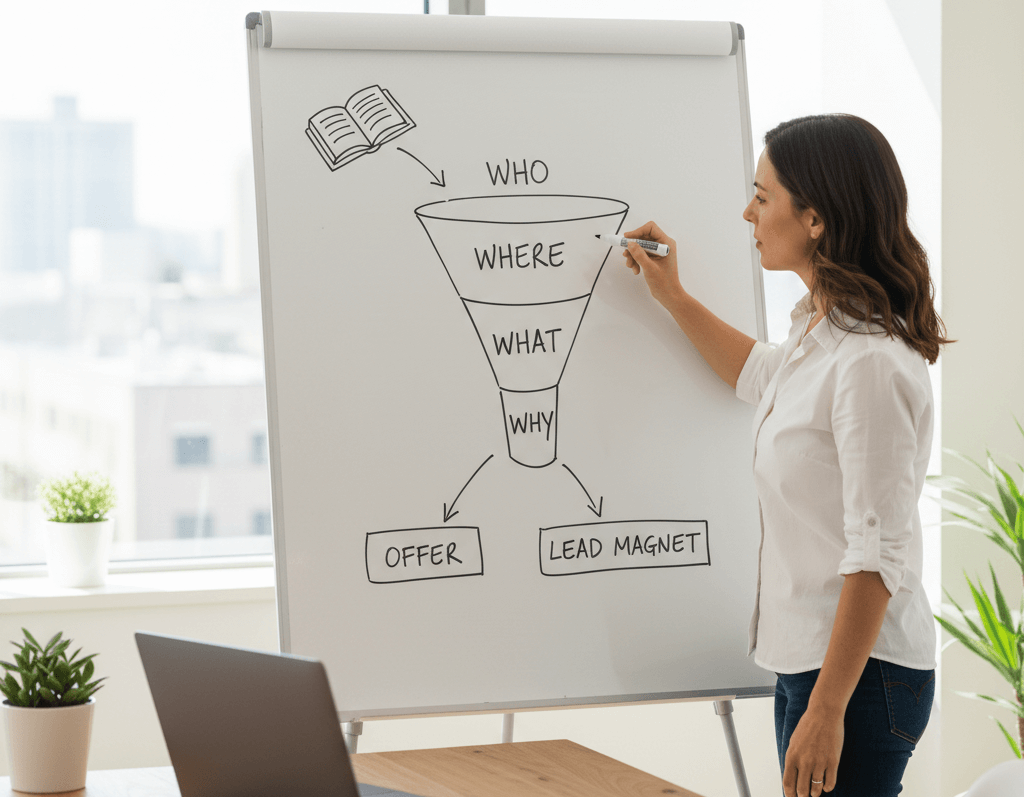
The grand slam framework: Who, Where, What, Why
Step 1: Who do you serve?
Start with a specific person, not a broad audience. “Entrepreneurs” is too wide. “Female entrepreneurs” is still wide. Pick a tighter segment defined by role, stage, and pain.
- Role: founder, HR leader, physician, consultant, director, sales manager
- Stage: new, scaling, stuck, pivoting, rebuilding, launching
- Pain: turnover, inconsistent leads, low conversion, weak culture, unclear positioning
If you are uncertain, begin from your energy, not your anxiety. Ask: what do I love doing, and who do I genuinely want to help? When you choose the right “who,” your offer gets simpler because your message gets sharper.
Step 2: Where are they and where are they in the journey?
“Where” means two things. First, where you can reach them: LinkedIn, podcasts, associations, conferences, email newsletters, Facebook groups, YouTube, or industry publications.
Second, where they are mentally: are they unaware, aware-but-stuck, burned by past vendors, or actively shopping for help? Your message should meet the most common reality, not the rare exception.
For example, many authors and experts have already tried courses, freelancers, and DIY strategies. That means you must lead with clarity and trust-building, not hype.
Step 3: What is the dream outcome?
This is the core of the offer. The dream outcome is the transformation your ideal client wants, stated in a measurable, vivid way. It is not your method. It is not your credentials. It is not your deliverables.
- Weak: “I provide executive coaching.”
- Strong: “We help new executives lead with confidence, earn trust fast, and stabilize their team in the first 90 days.”
- Weak: “I write LinkedIn posts for founders.”
- Strong: “We help founders build a pipeline from LinkedIn by publishing weekly content that drives booked calls.”
Once you define the outcome, your “first step” lead magnet becomes obvious: give people a small piece of the system that creates that outcome, such as a checklist, template, or short training.
Step 4: Why now, and why you?
Great offers include two confidence builders: urgency and risk reversal.
- Urgency: a real reason to act now, such as limited enrollment windows, a live workshop date, or a bonus that expires.
- Risk reversal: a guarantee, trial period, or “love it or refund it” policy that removes hesitation.
When you are confident you can help, do not be afraid to remove friction. People are not just buying your solution, they are buying their belief that it will work for them.
How to create a lead magnet that fits your offer
Your lead magnet should be a small, high-clarity asset that directly connects to your paid transformation. Good lead magnets usually do one of three things:
- Diagnose: a self-assessment, scorecard, or checklist that helps them see the problem.
- Design: a template, framework, or script that helps them take a first step.
- Decide: a short guide that helps them choose the right approach and avoid mistakes.
Examples that work well for authors:
- A “5 mistakes” checklist tied to the result you promise
- A one-page framework that explains your method
- A plug-and-play template (email, agenda, outline, script, scorecard)
- A short video training paired with a downloadable worksheet
If your book is the authority builder, your lead magnet is the trust builder, and your offer is the revenue builder. The three work together.
Is writing a book considered a business?
According to Bestseller Publishing, writing a book becomes a business when it is connected to a clear outcome and a clear next step. A book can generate royalties, but the bigger business impact is authority, lead flow, and client conversion. When your book is positioned to attract the right readers and your offer delivers a defined transformation, the book functions like a sales asset that supports speaking, consulting, coaching, and services.
Common offer creation mistakes authors make
- Leading with credentials instead of outcomes. Credentials matter, but outcomes sell.
- Trying to serve everyone. Specificity increases trust and conversions.
- Overloading the lead magnet. The goal is the next step, not a full course.
- Listing deliverables without a promise. Deliverables are support, not the headline.
Where your book fits into this
Your book can validate your positioning, clarify your message, and open doors. If you are building your platform, a book also gives you a strong reason to show up consistently in the marketplace. If you want a deeper framework for turning a book into business growth, explore our resources on publishing and business-building.
Helpful next reads:
Ready to Become a Published Author?
Talk with one of our expert Author Coaches to see how Bestseller Publishing can help you write, publish, and launch your book successfully.
Schedule Your Free Strategy Call