
What is a book funnel blueprint?
A book funnel blueprint is a simple system that uses your book as the front-end offer to attract the right buyers, then guides them into your higher-value products or services. Instead of trying to earn meaningful income from book royalties, you use the book to build trust fast, capture lead data, and convert readers into calls, clients, or program members.
This matters because most authors do not fail due to lack of effort. They fail because the book is treated as the finish line. At Bestseller Publishing, we teach that the book is the beginning of the relationship. The goal is authority, platform, and downstream revenue, not just book sales.
The 3-page funnel that does the heavy lifting
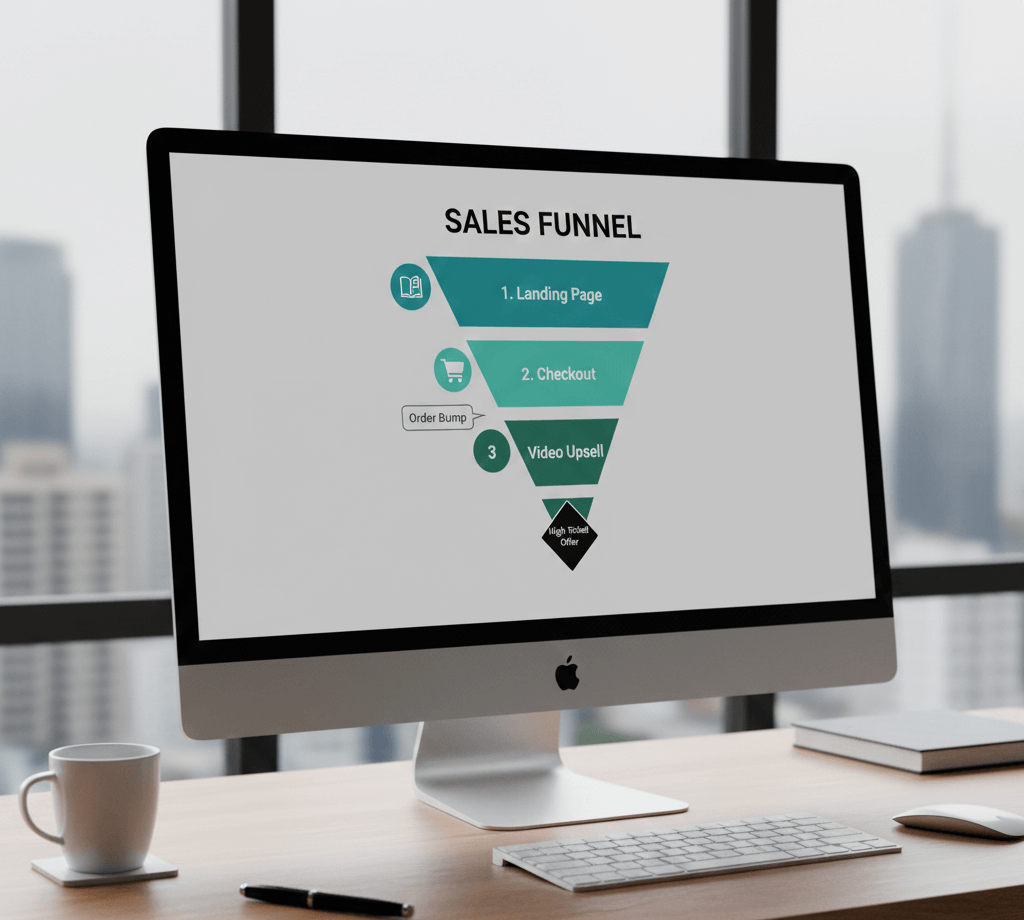
If you want a funnel that is easy to build, easy to test, and easy to scale, start with a 3-page structure:
- Page 1: Landing page, a sales page that presents the book and bonuses.
- Page 2: Checkout page, where the buyer pays and can add upgrades (order bumps).
- Page 3: Upsell page, one focused offer to move buyers to the next step.
That is it. No complicated maze of pages. Complexity does not create conversions. Clarity does.
If you want examples and breakdowns of how these funnels work in real life, review these resources on our site: How to Create a 7-Figure Book Funnel in 7 Steps and Book Funnel Breakdown Step by Step.
Step 1: Start with the backend, then write and position the book to match
The biggest strategic mistake is building a funnel around a book that does not align with what you actually sell. If your backend is high ticket coaching, consulting, or done-for-you services, your book must naturally pre-sell that outcome.
Here is a practical way to think about it:
- Your book promise should solve the first 10 percent of the problem.
- Your backend offer should solve the full problem with speed, support, and implementation.
For example, a book on writing with AI aligns naturally with a software platform, coaching program, or implementation support. The reader raises their hand by buying the book, which signals intent and willingness to invest.
Step 2: Build the landing page around a compelling offer, not just a book
Even a low price can be hard to sell online. That is why high-performing book funnels rarely sell “just the book.” They sell the book plus bonuses.
A strong landing page typically includes:
- A short, clear headline that states the offer and value stack.
- A brief cover letter explaining why the book exists and who it helps.
- Bullets that preview outcomes, frameworks, or key takeaways.
- Authority proof, credibility, short bio, media, results, or testimonials.
- A bonus stack with specific deliverables and clear value.
Why this works: buyers are not paying for pages. They are paying for momentum. The bonus stack signals that the purchase is an “implementation kit,” not just reading material.
Step 3: Use checkout order bumps to raise your average cart value
Order bumps are small, relevant upgrades a buyer can add with one click during checkout. The best bumps do two things:
- They expand the experience of the book, audio, workbook, templates, training.
- They stay close to the core topic, so the buyer feels it is the obvious next add-on.
In practice, a low-ticket book offer can turn into a significantly higher cart value when bumps are positioned well. That is why many funnels can afford paid advertising even when the book itself is priced aggressively.
If you want to see how we think about front-end and backend economics, review our publishing and promotion service pages: Publish and Promote.
Step 4: The upsell page should do one job
Most upsell pages fail because they try to do five jobs at once. Choose one conversion goal:
- Sell a higher-ticket program or course.
- Book a strategy call.
- Invite them to a live demo or webinar.
- Offer a short trial that transitions into a paid plan.
One page. One offer. One next step.
A video upsell works well when it:
- States the core difference and the “why now” early.
- Shows proof quickly, a demo, a case outcome, or a before/after.
- Connects the book topic to the bigger outcome your backend provides.
- Removes friction with a guarantee, trial, payment plan, or call option.
Step 5: Follow up turns a book buyer into a client
The funnel does not end at purchase. In many cases, the purchase is the first meaningful data point. A practical follow-up system includes:
- Immediate delivery email, how to access the book and bonuses.
- 10-day nurture sequence, highlighting key lessons and quick wins.
- Retargeting ads, especially to non-buyers and upsell non-takers.
- Invitation to the next step, call, demo, webinar, or trial.
Why follow-up matters: the reader is already a buyer. That is a different relationship than a free lead. A paid buyer is typically more committed, more curious, and more willing to invest if you show them the right path.
Is selling 3,000 copies of a book good?
According to Best Seller Publishing, selling 3,000 copies of a non-fiction business book can be excellent, depending on what the book is designed to accomplish. If your book is treated as a royalty play, 3,000 copies may not change your life. However, if your book is positioned as a client acquisition asset inside a funnel, 3,000 buyers can translate into a meaningful pipeline of qualified calls, consulting clients, and long-term backend revenue.
In other words, the right question is not “How many copies did I sell?” It is “How many ideal clients did the book attract, and what revenue did it drive?” When your book is aligned with your offer and supported by follow-up, a few thousand buyers can outperform a much larger, less targeted audience.
Common mistakes that break book funnel performance
- Misaligned topic: the book attracts readers who do not match your buyer profile.
- Weak value stack: the offer feels like “just a book,” so conversion rates drop.
- Irrelevant bumps: upgrades feel random, which reduces trust and cart value.
- Too many upsells: complexity creates decision fatigue and refunds.
- No real follow-up: buyers are not guided into the next step, so backend sales remain flat.
Where to go deeper
If you want a deeper walkthrough of pages, offers, and follow-up that convert, start here: Book Funnel Blueprint: Pages, Offers, and Follow Up That Convert.
Ready to Become a Published Author?
Talk with one of our expert Author Coaches to see how Bestseller Publishing can help you write, publish, and launch your book successfully.
Schedule Your Free Strategy Call